Key Takeaways
-
Most lawn care businesses fail within two years due to bad planning, underpricing, and poor marketing—not poor mowing skills; invest in legal setup and proper pricing from day one to protect profits.
-
Buy commercial-grade equipment if planning to service 5+ lawns weekly; a $5,000-$8,000 initial investment (commercial mower, tools, used truck/trailer) sets you up for full-time solo operation with better durability.
-
Form an LLC immediately and secure $1M general liability insurance—this protects your personal assets from lawsuits and is often required by commercial clients before hiring you.
-
Price at $1 per minute of work minimum ($30-$100 per cut in Tampa Bay); charge 20-30% more for biweekly service and focus on value over being cheapest to maximize profit margins.
-
Land your first 10 customers through personal networks, door-to-door canvassing, neighborhood Facebook groups, and real estate agent partnerships—word-of-mouth referrals are the most powerful marketing tool.
-
Optimize routes geographically, maintain detailed job checklists, and protect existing customers with proactive communication; it costs 5x more to acquire new customers than retain current ones during scaling.
Three years ago, Mike started mowing lawns with a $500 push mower and now manages a six-figure lawn care operation with five employees in Tampa Bay. His story isn’t unique — thousands of entrepreneurs across the country are discovering that starting a grass cutting business is one of the most accessible paths to financial independence available today. The barrier to entry is low, the demand is year-round (especially in Florida), and the profit potential is very real.
But here’s the truth: most new lawn care businesses fail within the first two years — not because of bad mowing, but because of bad planning. Skipping legal requirements, underpricing services, and ignoring marketing are the top three killers. This guide walks you through the exact 13-step startup sequence that successful lawn care entrepreneurs follow, including the overlooked legal must-dos and pricing strategies that protect your profits from day one. Whether you’re a busy parent looking for extra income or ready to go all-in on your own business, this roadmap is for you.
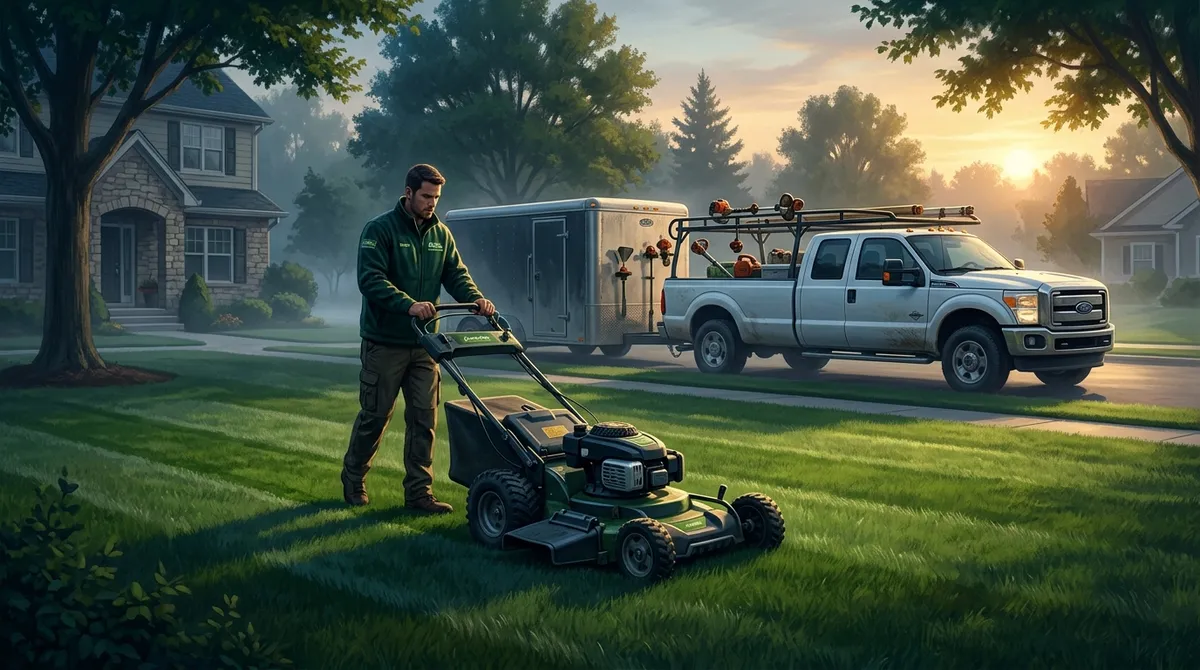
Essential Equipment and Initial Investment Breakdown
Before you mow a single blade of grass, you need the right tools. Your equipment is the foundation of your business, so it’s worth investing wisely from the start.
Commercial vs Residential Grade Mower Comparison
A residential lawn mower is built for occasional home use. A commercial-grade mower is built for 8+ hours of daily work. Commercial mowers have stronger engines, more durable decks, and faster cutting speeds. If you plan to service more than 5 lawns a week, go commercial from the start. It saves you money on repairs and replacements down the road.
Must-Have Tools Beyond the Mower
Your mower gets the job done, but these tools complete the picture:
- String trimmer (weed eater) for edges and tight spots
- Edger for clean sidewalk and driveway borders
- Backpack blower to clear clippings from driveways
- Hand tools like rakes, shovels, and pruning shears
- Safety gear: gloves, eye protection, and steel-toe boots
Truck and Trailer Requirements
You’ll need a reliable truck (half-ton or larger) and an open trailer (5×10 or 6×12 feet) to haul your gear. A used truck and basic trailer can cost between $8,000 and $15,000 combined. Look for fleet vehicles or lightly used trucks to keep costs manageable.
Budget Ranges From $2,000 to $15,000
| Budget Level | What You Can Get | Best For |
|---|---|---|
| $2,000 – $4,000 | Used residential mower, basic hand tools, used trailer | Solo starter, part-time |
| $5,000 – $8,000 | Entry commercial mower, full tool set, used truck/trailer | Full-time solo operator |
| $10,000 – $15,000 | Commercial walk-behind or stand-on mower, full setup | Growth-focused operation |
Equipment Financing and Leasing Options
Don’t have the cash upfront? Many equipment dealers offer 0% financing for 12–24 months. The Small Business Administration (SBA) also offers microloans for startups. Leasing is another option that keeps monthly costs low while giving you access to commercial-grade gear. Just make sure your projected revenue covers the payments comfortably.
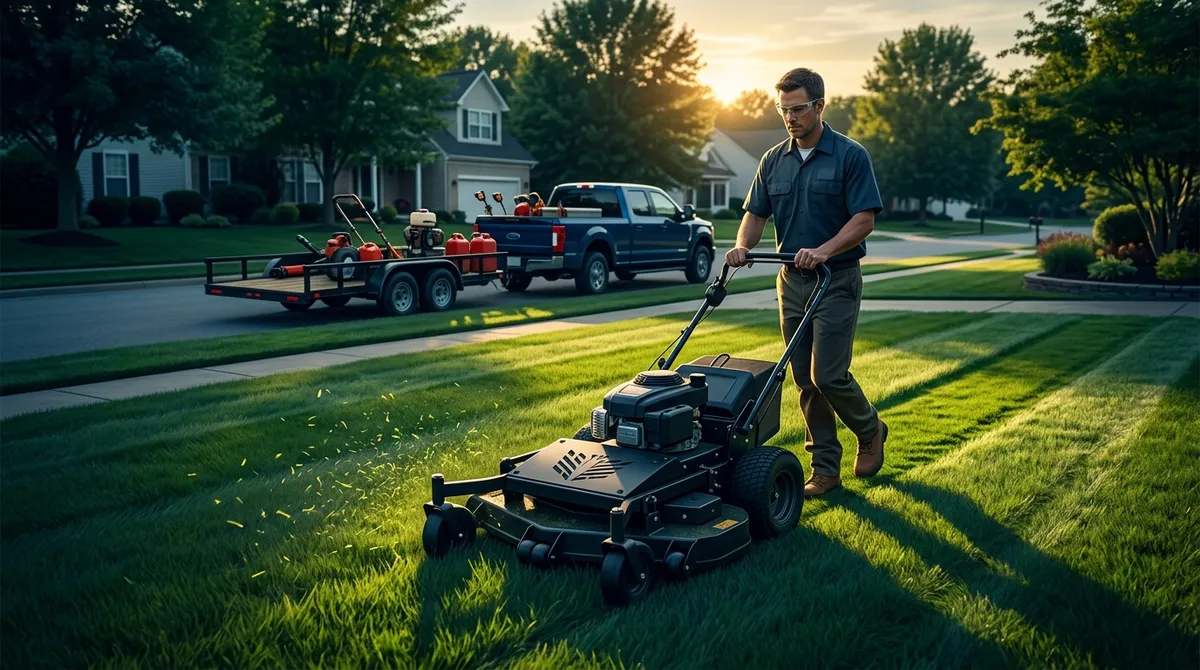
Legal Requirements and Business Registration
This is the step most new lawn care owners skip — and it can cost them big. Getting your legal house in order protects you, your customers, and your income.
Business License and Permit Requirements
Most cities and counties require a general business license to operate. In Florida, you’ll register with the Florida Division of Corporations. Check with your local county office for any additional permits needed for operating a landscaping or lawn maintenance business in your area.
Insurance Coverage Essentials
You absolutely need general liability insurance. This protects you if you accidentally damage a customer’s property or someone gets hurt on the job. Aim for at least $1 million in coverage. Many customers — especially commercial clients — will require proof of insurance before they hire you.
LLC vs Sole Proprietorship Decision
Starting as a sole proprietor is simple and cheap. But forming an LLC separates your personal assets from your business debts. If something goes wrong and you get sued, an LLC protects your personal savings and property. Most experts recommend going LLC from day one for peace of mind.
Tax ID and Employer Identification Numbers
You’ll need a Federal Employer Identification Number (EIN) from the IRS — it’s free and takes about 10 minutes online. You’ll use it to open a business bank account, file taxes, and eventually pay employees. Keep business and personal finances completely separate from day one.
Local Zoning and Noise Ordinances
Many neighborhoods have noise restrictions on lawn equipment, typically between 7 AM and 8 PM on weekdays. Know these rules before you schedule your first job. Operating during restricted hours can result in fines and angry customers — neither is good for business.
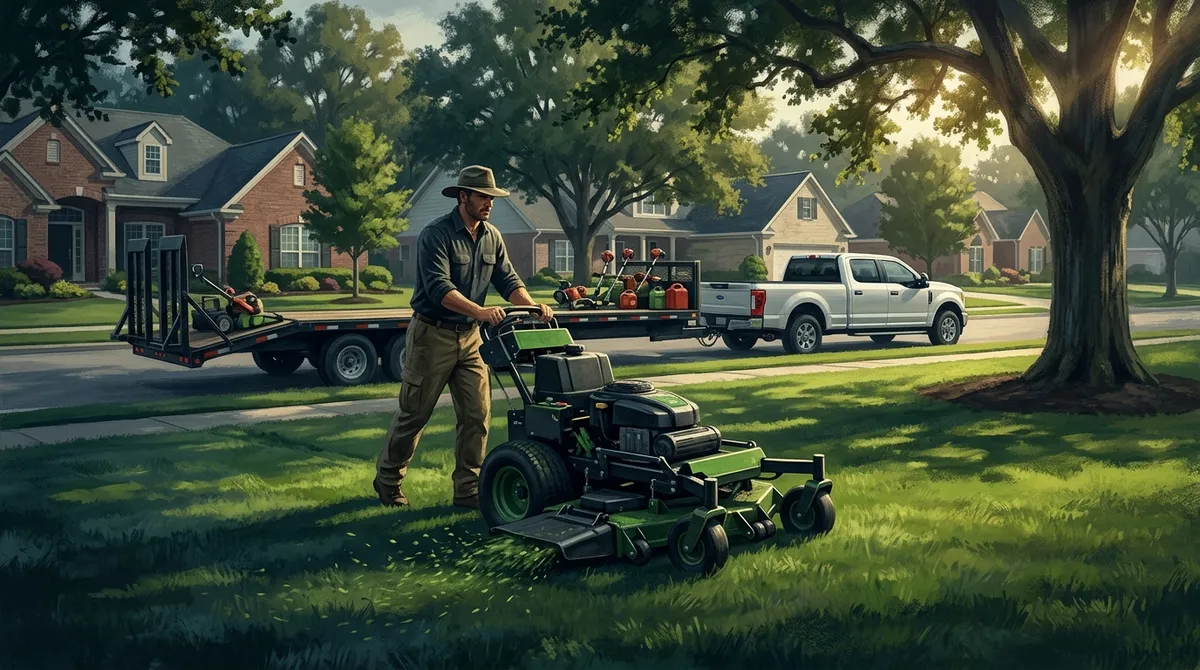
Pricing Your Services for Profit
Pricing is where many new grass cutting businesses go wrong. Price too low and you burn out. Price too high and you lose customers. Here’s how to find the sweet spot.
Cost Calculation Per Square Foot
A good rule of thumb: calculate your cost per minute of work. Include fuel, equipment wear, drive time, and your desired hourly wage. Most solo operators target $1 per minute of work, meaning a 30-minute lawn should earn you at least $30. In the Valrico and Tampa Bay area, lawn maintenance pricing typically ranges between $40 and $100 per cut depending on yard size.
Weekly vs Biweekly Service Pricing
Biweekly lawns take longer because the grass is taller. Charge 20–30% more for biweekly service compared to weekly. A monthly lawn service plan with weekly visits typically runs around $200 per month, depending on yard size — a fair and competitive price point for most homeowners.
Seasonal Pricing Adjustments
In Florida, grass grows year-round, so demand stays relatively stable. However, during peak growing season (spring and summer), you can charge a slight premium. Offer discounts for annual contracts to lock in steady income during slower periods.
Competitor Analysis Methods
Check neighborhood Facebook groups, Nextdoor, and local listing sites to see what other lawn care providers charge in your area. You don’t need to be the cheapest — you need to be the best value. Companies like All Trusted Lawn Care have built loyal customer bases by focusing on quality and consistency, not rock-bottom pricing.
Upselling Complementary Services
Once you have a mowing customer, it’s easy to add on services. Consider offering:
- Leaf clean-up in fall
- Mulch installation for flower beds
- Sod installation for new homeowners
- Property clean-up before or after seasons

Finding Your First 10 Customers
Your first 10 customers are the hardest — and most important. Here’s a proven step-by-step approach to landing them fast.
- Start with your personal network. Tell every friend, family member, and neighbor what you’re doing. Your first customers are usually people who already know and trust you.
- Go door-to-door in target neighborhoods. Dress professionally, bring simple flyers, and knock on doors. Focus on streets where the grass looks like it needs help. Be friendly and straightforward — most homeowners respect the hustle.
- Post in neighborhood Facebook groups. Introduce yourself, share your services, and include a before-and-after photo if you have one. Ask group members to tag neighbors who might need lawn help. A warm intro from a mutual neighbor converts far better than a cold ad.
- Launch a referral incentive program. Offer existing customers $20 off their next service for every new customer they refer. Word-of-mouth is still the most powerful marketing tool in the lawn care industry.
- Offer a free or discounted trial cut. Target one or two homes on a street, do an exceptional job, and let the results speak for themselves. Neighbors notice. A perfectly edged lawn in a neighborhood full of shaggy yards is a walking billboard.
- Partner with real estate agents. Agents constantly need lawns cleaned up for listings and new homeowners need ongoing maintenance. One agent relationship can turn into 5–10 new customers. Connect with local agents at community events or through LinkedIn.
For those in the Valrico area, check out the Valrico lawn care community to see how local pros position themselves in this market.
Building Your Online Presence
In 2026, if you’re not online, you don’t exist. The good news? You don’t need a big budget to build a strong digital presence.
Google My Business Optimization
Claim and fully complete your Google Business Profile immediately. Add your service area, hours, phone number, photos, and a description packed with local keywords. When someone searches “lawn care near me” in your city, a complete profile dramatically increases your chances of showing up. You can see a great example of this in action — visit us on Google to see how a professional profile looks.
Before and After Photo Strategies
Always take before and after photos of every job. These images are marketing gold. Post them on Google, your website, Facebook, and Instagram. Homeowners love seeing real results. A dramatic transformation — overgrown to pristine — builds trust and drives inquiries fast.
Review Generation Tactics
After every job, send a quick text message asking the customer for a Google review. Make it easy — include a direct link. Positive reviews are the number one trust factor for new customers. Aim to collect at least 10 reviews in your first 3 months.
Simple Website Essentials
You don’t need a fancy website. You need a clean, mobile-friendly page with these basics:
- Your service area and contact info
- List of services offered
- Before and after photos
- Customer reviews or testimonials
- A simple contact form or click-to-call button
Social Media Posting Schedule
Consistency beats perfection on social media. Post 3–4 times per week on Facebook and Instagram. Mix lawn transformations, tips, behind-the-scenes content, and customer shout-outs. Engage with comments and local community groups to build your following organically.
Scaling From Solo to Team Operation
Once you’re consistently booked, it’s time to think bigger. Growing from a one-person show to a team operation requires planning and systems.
When to Hire Your First Employee
The right time to hire is when you’re turning away work. If you’re consistently full and can’t take new customers, you’re ready to add help. Start with a part-time crew member 2–3 days a week. Make sure your revenue can comfortably cover wages plus payroll taxes before committing to a full-time hire.
Training Systems and Checklists
Create a simple job checklist for every service. It should cover:
- Mowing pattern and height settings
- Trimming all edges and hard-to-reach spots
- Edging sidewalks and driveways
- Blowing clippings off all hard surfaces
- Final walkthrough before leaving
A written checklist ensures every lawn looks great — whether you’re on-site or not. Quality control is what keeps customers loyal during your growth phase.
Route Optimization Strategies
As you add customers, organize your schedule geographically. Group jobs by neighborhood to minimize drive time. Less windshield time means more lawns per day and more profit per hour. Use free tools like Google Maps or route optimization apps to plan your daily schedule efficiently. Check out Brandon lawn care and Bloomingdale lawn care service areas as examples of how local pros build dense, efficient route territories.
Customer Retention During Growth
Growing businesses often lose customers because service quality slips. Prevent this by:
- Communicating schedule changes proactively
- Doing occasional quality checks on crews
- Sending satisfaction check-ins every 30–60 days
- Rewarding long-term customers with loyalty discounts
It costs five times more to acquire a new customer than to keep an existing one. Protect what you’ve already built.
Equipment Maintenance Schedules
Commercial equipment works hard. Neglect it and you’ll face expensive breakdowns and missed jobs. Set a simple maintenance schedule:
- Check and change engine oil every 25–50 hours of use
- Sharpen mower blades every 25 hours
- Inspect and replace air filters monthly
- Grease all fittings and moving parts weekly
- Annual full service before peak season
Well-maintained equipment lasts longer, performs better, and makes your lawns look sharper — which means happier customers and stronger reviews.
If you’re in the Valrico or Fishhawk area and want to see what a professional, scalable lawn care operation looks like in action, browse the All Trusted Lawn Care gallery for real before-and-after results. You can also explore our full range of lawn care services to understand what a complete offering looks like as you plan your own business.
Starting a grass cutting business in 2026 is genuinely exciting. The Tampa Bay area — including Valrico, East Brandon, Bloomingdale, and Fishhawk — is full of homeowners who need and value quality lawn care. The market is there. The opportunity is real. All it takes is the right plan, the right tools, and the drive to show up and do excellent work every single day.
Ready to take the next step? Whether you’re looking for inspiration, want to see what professional lawn care looks like, or need services for your own property while you build your business, reach out to our team today — we’re always happy to connect with fellow lawn care enthusiasts in the community.
Get in touch with All Trusted Lawn Care and let’s talk lawns!
FAQs
Q: How much can I realistically earn in my first year cutting grass?
A: Most solo operators starting a grass cutting business can earn between $30,000 and $60,000 in their first year, depending on how many clients they build and how efficiently they run their routes. If you’re in a high-demand area like Tampa Bay and stay consistent with your marketing, hitting the higher end of that range is absolutely achievable. The key is pricing your services fairly from day one and staying on top of your schedule.
Q: Do I need commercial auto insurance for my lawn care truck?
A: Yes — if you’re using your truck to haul equipment and travel between job sites for pay, a personal auto policy typically won’t cover you in the event of an accident. Commercial auto insurance protects your vehicle, your trailer, and your business if something goes wrong on the road. It’s a small monthly cost that gives you big peace of mind — definitely don’t skip it!
Q: What’s the best time of year to start a grass cutting business?
A: In Florida and the Tampa Bay area, spring (February through April) is the ideal time to launch because grass growth accelerates and homeowners are actively looking for lawn care help. That said, because Florida lawns grow year-round, you can technically start in any season and still find customers. Starting in late winter gives you time to build your client base before the peak summer rush hits.
Q: Should I offer services beyond just mowing from the start?
A: It’s smart to start with mowing as your core service and master it before adding more offerings — trying to do too much too soon can stretch you thin. Once you’re comfortable and have steady clients, adding services like leaf clean-up, mulch installation, and sod installation can significantly boost your average ticket and annual revenue. Think of each add-on service as a way to deepen relationships with customers you already have.
Q: How do I handle customers who want service while I’m on vacation?
A: The best solution is to build a reliable network of backup operators or sub-contractors you trust to cover for you — ideally someone whose work quality matches yours. You can also offer customers the option to skip that week or prepay for a makeup cut when you return, whichever they prefer. Being upfront and communicating early always goes a long way toward keeping customers happy and loyal.