Key Takeaways
-
Riverview lawns need about ¾ to 1 inch of water per week total; during Florida's rainy season (June-September) natural rainfall often covers this entirely, so you may not need sprinklers at all.
-
Spongy or soggy soil is the clearest sign of overwatering; cut watering frequency in half for 1-2 weeks and let soil dry between sessions to restore grass health and prevent root suffocation.
-
Use the simple footprint test to check moisture: if your footprints stay flat and visible for several minutes, your grass is stressed from underwatering; if they spring back quickly, moisture is adequate.
-
Water early morning before 10 a.m. to reduce evaporation and fungal disease risk; many Riverview homeowners forget to adjust timers during rainy season, wasting water and money unnecessarily.
-
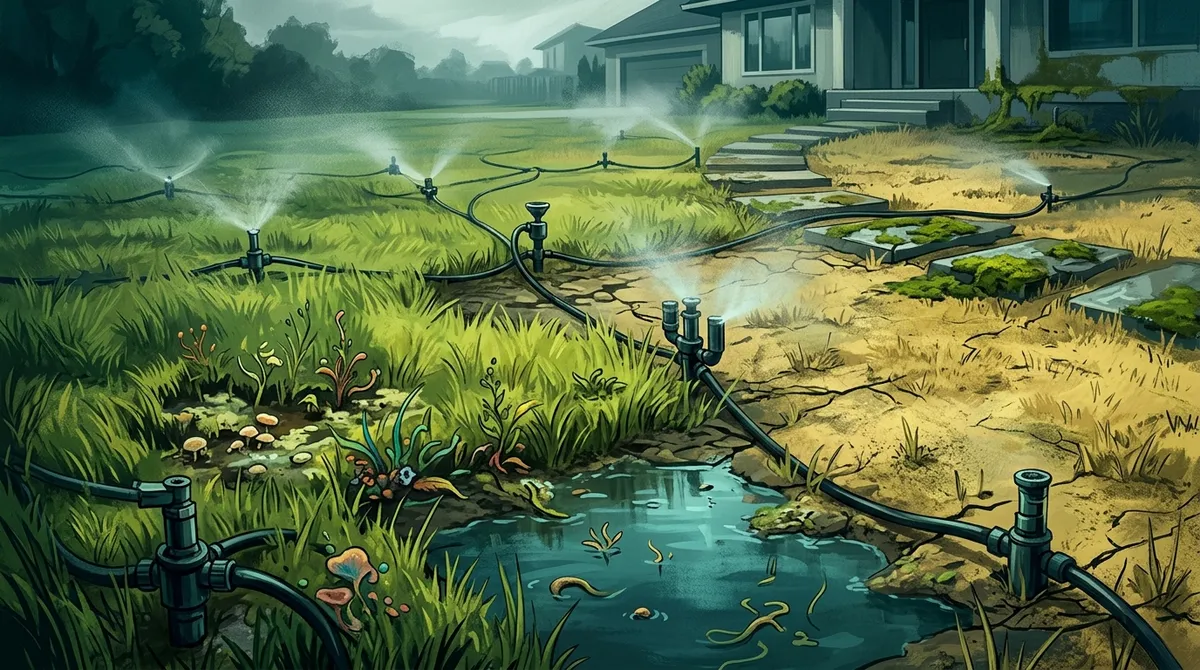
Mushrooms and algae are red flags for overwatering in Florida's heat; yellow patches across the entire lawn indicate too much water, while yellowing in high spots suggests underwatering.
-
Use the tuna can method to measure actual sprinkler output: place empty cans on your lawn, time how long to reach ¾ inch, and adjust your timer accordingly for accurate watering.
If you’ve ever stood in your Riverview yard wondering why your grass looks yellow, soggy, or just plain sad, you’re not alone. Getting the watering right is one of the trickiest parts of lawn care in Florida. The heat, humidity, and sandy soil make it easy to go too far in either direction. Too much water and you invite fungus and soggy roots. Too little and your grass turns crispy brown fast. So if you’re asking yourself, am I watering my Riverview lawn too much or too little, this guide is here to help. We’ll walk through 8 clear signs to watch for — and what to do about each one.

Why Watering Is So Tricky in Riverview, Florida
Riverview sits in the heart of Tampa Bay’s humid subtropical climate. That means hot summers, heavy rainy seasons, and mild winters. Your lawn’s water needs shift a lot depending on the season. During Florida’s rainy season (roughly June through September), your sprinklers may need to run far less often. During dry winter months, your lawn may need more help than you think. Understanding these patterns is the first step to getting your Riverview lawn watering right. For a deeper dive into how water affects your specific grass type, the basics of lawn care equipment and technique can offer helpful background context too.

The Most Common Grass Types in Riverview
Before spotting watering problems, it helps to know what you’re growing. Most Riverview lawns feature one of these grass types:
- St. Augustine grass — Loves moisture but hates being waterlogged
- Bahia grass — Drought-tolerant and needs less frequent watering
- Zoysia grass — Falls somewhere in between, handles drought well once established
Knowing your grass type helps you set the right watering schedule. If you’re unsure what’s growing in your yard, check out the best grass types for Riverview lawns to narrow it down quickly.
8 Signs You’re Watering Your Riverview Lawn Wrong
1. Your Grass Feels Spongy or Soggy When You Walk on It
If your lawn feels like a wet sponge underfoot, that’s a strong signal you’re overwatering. Waterlogged soil suffocates grass roots. It cuts off the oxygen roots need to stay healthy. This is one of the clearest answers to the question, am I watering my Riverview lawn too much or too little — and in this case, it’s definitely too much.
What to do: Cut your watering frequency in half for one to two weeks. Let the soil dry out a bit between sessions. You’ll likely see improvement quickly.
2. You Notice Yellow or Pale Green Patches
Yellow patches are sneaky. They can mean your lawn is getting too much water OR too little. The key is where you see them. Widespread yellowing across the whole lawn usually points to overwatering. Yellow patches in high spots or along edges often signal underwatering. Check out 6 signs you are overwatering your lawn in Riverview to get a clearer picture of what’s causing the issue in your specific yard.
3. Mushrooms or Algae Are Growing in Your Yard
Mushrooms love moisture. If you’re seeing them pop up regularly in your grass, your soil is staying too wet for too long. Algae — that slimy green film — is another red flag. Both are classic signs of overwatering. Fungal problems can spread fast in Florida’s heat, so it’s worth addressing this quickly. You can also read about common overwatering mistakes to avoid making the problem worse.
4. Your Grass Blades Are Curling or Wilting
When grass doesn’t get enough water, it protects itself by curling inward. This is a stress response. St. Augustine grass, which is very common in Riverview, will fold its blades lengthwise when it’s thirsty. If you see this happening — especially in the afternoon heat — it’s time to water. Just be sure to do it at the right time. According to the best watering times for Riverview lawns, early morning (before 10 a.m.) is ideal to reduce evaporation and fungal risk.
5. Footprints Stay Visible in the Grass for a Long Time
Here’s a simple test: walk across your lawn and look back. Do your footprints spring back up quickly? That means your grass has good moisture. If the footprints stay flat and visible for several minutes, your grass is stressed from lack of water. This is called the “footprint test” and it’s one of the easiest ways to check soil moisture without any tools.
6. You See Brown or Straw-Colored Patches
Brown patches in Florida lawns have two main causes: underwatering and lawn fungus (which ironically is often caused by overwatering). To tell the difference, pull gently on a few brown grass blades. If they come out easily from the soil without much resistance, it’s likely fungus damage. If the blades are just dry and brittle but roots hold firm, you’re probably underwatering. For a full breakdown, learn why lawns turn brown even with regular watering.
This situation also comes up a lot for new homeowners who aren’t yet sure how to read their lawn’s signals. If that sounds like you, the new homeowner lawn care guide for Riverview is a great place to start.
7. Runoff or Puddles Form During Watering
If water is running off your lawn and pooling in the street or on sidewalks, your sprinklers are putting out more water than the soil can absorb. This usually means you’re watering too long, too fast, or both. It wastes water and can even lead to erosion over time. Try watering in shorter, more frequent cycles — known as “cycle and soak” — instead of one long run. This gives water time to soak in properly.
| Watering Problem | Sign to Look For | Fix |
|---|---|---|
| Overwatering | Spongy soil, mushrooms, runoff | Reduce frequency, check timer settings |
| Underwatering | Curling blades, footprints stay, brown patches | Increase watering, check for dry spots |
| Watering at wrong time | Fungus, disease, slow drying | Switch to early morning watering |
| Uneven coverage | Patchy green and brown areas | Adjust or repair sprinkler heads |
8. Your Water Bill Is Unusually High
This one hits home for busy homeowners. If your water bill has climbed without a clear reason, your irrigation system may be running too often or for too long. Many homeowners in Riverview set their timers in spring and forget to adjust them when the rainy season hits. During Florida’s rainy season, you may not need to run your sprinklers at all. Use a rain sensor or smart irrigation controller to automate this and save money.

How Much Water Does a Riverview Lawn Actually Need?
Most lawns in Riverview need about ¾ to 1 inch of water per week. This includes rainfall. During the wet season, natural rain often covers this entirely. During dry months, your irrigation system needs to fill in the gap. To measure how much water your sprinklers deliver, place a few empty tuna cans on the lawn while running your system. Time how long it takes to reach ¾ inch. That’s your target run time. For more detail, see exactly how much water your Riverview lawn needs.
Quick Reference: Watering Schedule by Season
| Season | Recommended Frequency | Notes |
|---|---|---|
| Spring (Mar–May) | 2–3 times per week | Grass is actively growing, needs consistent moisture |
| Summer Rainy Season (Jun–Sep) | 0–1 time per week | Let rain do the work; use rain sensor |
| Fall (Oct–Nov) | 1–2 times per week | Rain slows; monitor soil moisture |
| Winter (Dec–Feb) | 1 time per week or less | Growth slows; reduce watering significantly |
Simple Steps to Fix Your Watering Routine
If you’ve spotted one or more of the signs above, here’s how to get back on track:
- Adjust your irrigation timer based on the current season and recent rainfall
- Water early in the morning before 10 a.m. to reduce fungal risk and evaporation
- Check your sprinkler heads for clogs, broken nozzles, or poor coverage
- Install a rain sensor so your system shuts off automatically when it rains
- Use the tuna can method to measure actual water output from your system
- Walk your lawn weekly to check for early signs of stress or overwatering
These steps are simple but make a big difference. Even small adjustments can transform a struggling lawn into a lush, healthy one. If you’re dealing with more complex lawn health issues, 13 common lawn care problems and how to fix them covers a wide range of situations you might encounter.
What If the Problem Goes Beyond Watering?
Sometimes even a perfect watering routine isn’t enough. If your lawn still looks rough after adjusting your irrigation, it may need professional attention. Poor mowing habits, soil issues, and weed competition can all make watering problems worse. That’s where a reliable lawn care team comes in. All Trusted Lawn Care proudly serves Riverview, Valrico, Bloomingdale, Fishhawk, and surrounding communities. Our team helps homeowners identify what their lawn actually needs — and keeps it looking great year-round with dependable lawn maintenance services.
You can also see what our All Trusted Lawn Care customers are saying on Google to get a feel for the kind of service we provide across the Riverview area. We’re proud of the trust our neighbors place in us, and we love helping homeowners take the guesswork out of lawn care.
Follow us on our All Trusted Lawn Care Facebook page for seasonal tips, local lawn updates, and more advice tailored to Riverview yards.
Eco-Friendly Watering Tips for Riverview Families
If you have kids and pets playing in the yard, watering smart also means watering safe. Here are a few eco-friendly habits worth building:
- Water deeply but less often to encourage deep root growth
- Use a smart irrigation controller to prevent waste
- Collect rainwater where regulations allow for supplemental use
- Avoid watering in the evening to reduce moisture-driven lawn diseases
- Choose grass types suited to Riverview’s climate to reduce overall water demand
These habits are good for your lawn, your wallet, and the environment. And they make your outdoor space safer and more enjoyable for the whole family.
When to Call a Lawn Care Professional
Some watering problems are DIY-friendly. Others signal a deeper issue that needs expert eyes. Consider calling a professional if:
- You’ve adjusted your schedule but problems persist after 2–3 weeks
- Large sections of your lawn are dead or dying
- You suspect irrigation system damage or coverage gaps
- Fungal disease or pest damage may be involved
- You’re preparing to install new sod and want to start with a healthy foundation
Getting professional help early often saves you money in the long run. Learn more about lawn care in Riverview, FL and what services can help you get your yard back on track fast.
Conclusion: Stop Guessing and Start Watching
The question am I watering my Riverview lawn too much or too little doesn’t have to be a mystery. Your lawn tells you what it needs — you just have to know what to look for. Use the signs in this guide to diagnose your current situation, adjust your schedule by season, and build simple habits that keep your grass healthy all year long.
Ready to take the guesswork out of lawn care? Our team at All Trusted Lawn Care is here to help Riverview homeowners like you keep their yards looking their best. Reach out today to get started or give us a call at 813-833-1882 to schedule your free estimate. We’d love to help you fall in love with your lawn again!
FAQs
Q: How often should I water my Riverview lawn in summer?
A: During Riverview’s rainy season (June through September), you may not need to run your sprinklers at all! Natural rainfall usually provides enough moisture. Outside the rainy season, watering two to three times per week is a solid starting point for most grass types.
Q: What are the top signs of overwatering a lawn in Florida?
A: The biggest warning signs include soggy or spongy soil, mushrooms popping up in the yard, yellow patches across the lawn, and water runoff onto sidewalks or streets. If you spot any of these, try cutting your watering frequency in half and see if things improve within a week or two.
Q: What time of day is best to water my Riverview lawn?
A: Early morning — ideally between 6 a.m. and 10 a.m. — is the best time to water your lawn in Riverview. This gives the grass time to absorb moisture before the midday heat causes evaporation, and it helps the lawn dry out before evening, reducing the risk of fungal disease.
Q: Can I tell if my lawn needs water just by looking at it?
A: Yes, you can! Look for curling or folding grass blades, a blue-gray tint on the lawn, or footprints that stay visible for several minutes after you walk across the grass. These are all signs your lawn is thirsty and could use a good, deep watering session.
Q: Do professional lawn care services help with watering issues?
A: Absolutely! While watering itself is often a DIY task, a professional lawn care team can help identify underlying problems that watering alone can’t fix — like disease, poor drainage, or uneven lawn coverage. At All Trusted Lawn Care, we’re happy to assess your yard and point you in the right direction.