Key Takeaways
-
Keep St. Augustine grass between 3.5-4 inches tall and alternate mowing direction weekly to prevent scalping and stress; mow in mid-morning with sharp blades for clean cuts.
-
Use slow-release fertilizers every 6-8 weeks instead of quick-release products, as sandy FishHawk soil drains too fast for nutrients to be absorbed effectively.
-
Water deeply (half to three-quarters inch) on your two allowed days per week in early morning (4-8 a.m.) and adjust irrigation seasonally since FishHawk gets heavy rain June-September.
-
Apply pre-emergent herbicide in late January/early February before soil hits 55°F to prevent crabgrass, and monitor for chinch bugs in sunny spots near driveways.
-
Edge driveways and sidewalks every 1-2 weeks with a dedicated edger tool to maintain HOA compliance and curb appeal in this upscale community.
-
Professional weekly mowing ($200/month average) often costs less than DIY when factoring in equipment, fuel, and time—and professional teams maintain sharper blades for healthier lawns.
When Maria Rodriguez moved to FishHawk Ranch three years ago, her St. Augustine grass turned yellow within weeks despite following all the standard lawn care advice. She watered it regularly, mowed on schedule, and even picked up a bag of fertilizer from the hardware store. Nothing worked. It wasn’t until she connected with neighbors who’d lived in FishHawk for years that she discovered the real secrets to keeping a lawn thriving in this part of Florida.
FishHawk is a beautiful, upscale community near Valrico where lush, green lawns are practically a point of pride. But this corner of the Tampa Bay area has its own quirks — sandy soil, strict HOA standards, and a year-round growing season that never lets up. The good news? Once you know what works here, maintaining a gorgeous lawn becomes much more manageable. Here are the seven lawn service secrets that FishHawk locals actually swear by.

Why FishHawk Lawns Need Special Attention
FishHawk isn’t like most Florida communities. It sits in a part of Hillsborough County where the soil, the neighborhood standards, and the climate all create a unique set of challenges for homeowners.
Sandy Soil Challenges Unique to FishHawk
The soil in and around FishHawk is highly sandy. Sandy soil drains very quickly, which means nutrients wash away before grass roots can absorb them. This is why so many new residents see their lawns struggle even when they think they’re doing everything right. Organic matter breaks down fast here, and the ground can dry out within hours of watering.
HOA Standards and Neighborhood Expectations
FishHawk Ranch has active HOA guidelines. Overgrown edges, brown patches, or weedy lawns can result in notices and fines. Keeping up with those standards isn’t just about pride — it’s a real obligation for homeowners in this community.
Year-Round Growing Season Demands
Unlike northern states where lawns go dormant in winter, Florida grass keeps growing almost every month of the year. That means your lawn care routine never really gets a break. You need a plan that works in January just as much as it works in July.
Common Grass Types in FishHawk Communities
Most FishHawk lawns feature St. Augustine grass, which thrives in warm, humid climates. Some homes also have Zoysia or Bahia grass. Each type has different mowing heights, watering needs, and fertilization requirements. Knowing your grass type is step one to a healthier lawn. If you’re starting fresh or replacing damaged turf, check out professional sod installation options to get the right grass variety in the ground from day one.

The Weekly Mowing Pattern That Prevents Scalping
Mowing sounds simple. But in FishHawk, the wrong mowing habits are one of the top reasons lawns look stressed and patchy. Here’s how to do it right.
Optimal Cutting Height for St. Augustine Grass
St. Augustine grass should be kept between 3.5 and 4 inches tall. Many homeowners cut too short, thinking shorter means less frequent mowing. In reality, cutting too low — called scalping — stresses the grass, exposes the soil to heat, and invites weeds. Set your lawn mower blade higher than you think you need to.
Direction Alternation Technique for Even Growth
Mowing in the same direction every week causes the grass to lean one way and creates ruts in sandy soil. Alternate your mowing direction each week — north-south one week, east-west the next. This promotes more upright, even growth and keeps your lawn looking full and lush.
Morning vs Afternoon Mowing Benefits
The best time to mow in FishHawk is mid-morning, after the dew has dried but before the afternoon heat peaks. Mowing wet grass tears instead of cuts cleanly. Mowing in peak afternoon heat stresses the grass and the person pushing the mower. Mid-morning is the sweet spot for clean, healthy cuts.
Blade Sharpness Frequency for Clean Cuts
A dull mower blade shreds grass blades instead of cutting them. Shredded tips turn brown and make the whole lawn look dull. Sharpen your mower blade at least once every two months during active growing season. If you hear a tearing sound rather than a clean cut, it’s time to sharpen. Professional lawn maintenance teams like All Trusted Lawn Care keep their equipment sharp and ready on every visit, which makes a noticeable difference in lawn appearance.
Fertilization Schedule That Works in FishHawk’s Climate
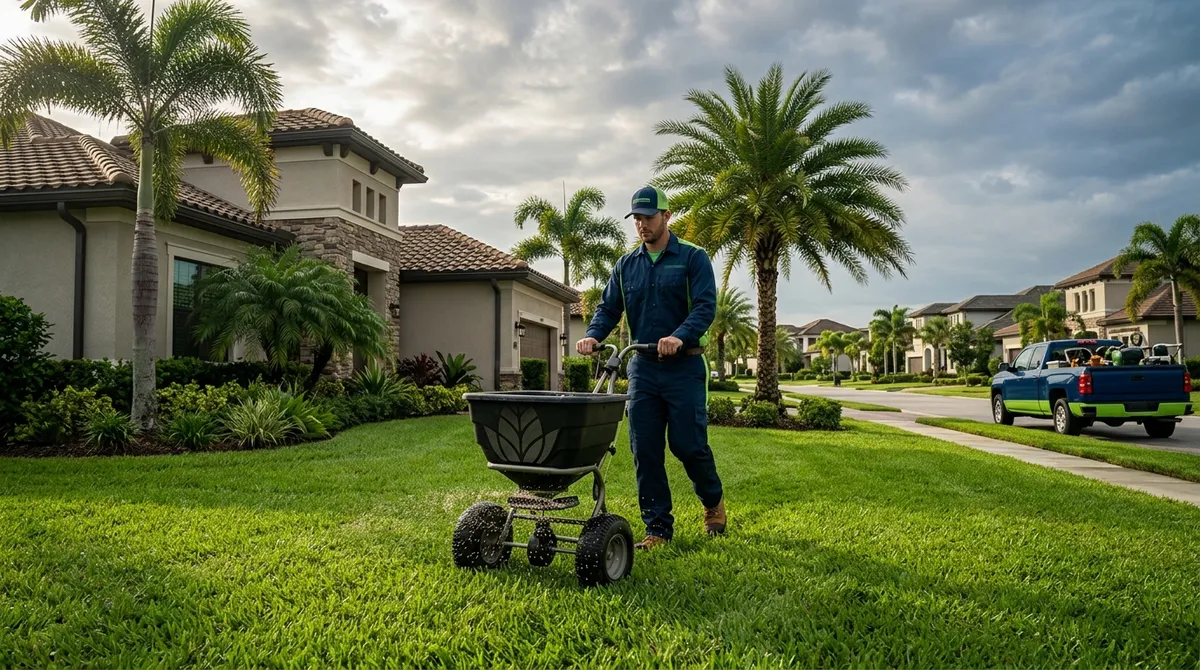
Because sandy soil doesn’t hold nutrients well, fertilization in FishHawk requires more strategy than in other parts of the country. Getting the timing and type right makes a huge difference.
Monthly Nutrient Needs Through Florida Seasons
Florida’s growing season stretches nearly year-round, but nutrient needs do shift with the seasons. Spring and summer are peak feeding times. Fall applications help the lawn harden off slightly before cooler months. Winter fertilization should be light to avoid pushing tender new growth that could be damaged by a rare cold snap.
Slow-Release vs Quick-Release for Sandy Soil
In sandy soils like those in FishHawk, slow-release fertilizers are almost always the better choice. Quick-release formulas wash through the sandy soil before grass roots can use them effectively. Slow-release granules break down gradually, feeding the grass over weeks rather than days. This also reduces the risk of fertilizer burn.
| Fertilizer Type | Best For | Sandy Soil Performance | Application Frequency |
|---|---|---|---|
| Slow-Release Granular | General feeding | Excellent | Every 6-8 weeks |
| Quick-Release Granular | Fast green-up | Poor (leaches quickly) | Every 3-4 weeks |
| Liquid Fertilizer | Micronutrient boosts | Moderate | Monthly during growing season |
Pre-Emergent Timing for Crabgrass Prevention
Pre-emergent herbicides stop weed seeds from germinating. In FishHawk, apply pre-emergent in late January or early February before soil temperatures rise above 55°F. A second application in early fall can help prevent a late-season flush of weeds. Timing is everything — apply too late and the weeds are already sprouting.
Micronutrient Supplements for Deep Green Color
Sandy soil is often low in iron and manganese. These micronutrients are what give St. Augustine grass that rich, deep green color FishHawk homeowners love. Adding an iron supplement a few times per year can dramatically improve your lawn’s color without pushing excessive growth. Look for products labeled for Florida lawns specifically. For a full-picture approach to your outdoor space, explore lawn care solutions designed for this region.

Smart Irrigation Strategies for Water Restrictions
Hillsborough County has watering restrictions that most FishHawk homeowners must follow. Working within those rules while keeping your lawn green requires a smart approach.
Two-Day Watering Schedule Optimization
Most FishHawk homes are on a two-day-per-week irrigation schedule based on their address. The key is making those two days count. Water deeply each session — about half an inch to three-quarters of an inch — rather than lightly every day. Deep watering encourages grass roots to grow deeper into the soil, making the lawn more drought-tolerant.
Early Morning Watering Windows
Water between 4 a.m. and 8 a.m. whenever possible. Early morning watering allows moisture to soak into the soil before heat causes evaporation. It also keeps the grass dry by midday, which reduces the risk of fungal disease — a real concern in humid FishHawk summers.
Rain Sensor Installation Benefits
Florida law actually requires rain sensors on automatic irrigation systems. If yours isn’t working, get it fixed. A functioning rain sensor prevents your system from running during or after rainfall, saving water and preventing overwatering. Overwatered St. Augustine grass is more susceptible to fungus and root rot, both of which are hard to reverse once established.
Adjusting for Seasonal Rainfall Patterns
FishHawk gets most of its rainfall between June and September. During those months, you may need to reduce your irrigation schedule significantly. Then, in the dry season from October through May, bump your watering back up. Adjusting with the seasons saves water and keeps your lawn healthier. Connect with the team at FishHawk lawn care for personalized advice on seasonal schedules.
Pest Control Methods Safe for Kids and Pets
FishHawk is full of families with children and pets playing on the lawn every day. Pest control here has to be effective but also safe for everyone who uses the yard.
Chinch Bug Identification and Treatment
Chinch bugs are the number one pest problem for St. Augustine lawns in this area. They suck moisture out of grass blades and cause yellow or brown patches that spread quickly. You’ll often notice them first near driveways, sidewalks, or sunny spots where the lawn dries out fastest.
- Look for irregular yellow patches that don’t respond to watering
- Part the grass at the edge of a yellow patch and look for tiny red or black insects
- Treat early — chinch bug damage spreads fast in summer heat
- Choose insecticides labeled safe for St. Augustine grass and pets after drying
Fire Ant Prevention Without Harsh Chemicals
Fire ants are a fact of life in Florida, but you don’t have to drench your yard in heavy chemicals to control them. Targeted bait treatments are more effective and much safer than broadcast sprays. Apply bait around mounds early in the morning or evening when ants are most active. Spinosad-based products are a good option for families prioritizing lower-toxicity solutions.
Grub Control Timing and Application
Lawn grubs are the larvae of beetles, and they feed on grass roots underground. Signs of grub damage include spongy turf that lifts like a carpet. In Florida, treat preventatively for grubs in late spring before eggs hatch — typically between April and June. This timing prevents damage before it starts rather than trying to treat after the fact.
Natural Deterrents for Common Lawn Pests
There are several natural approaches worth trying alongside or before chemical treatments:
- Neem oil — effective against a range of surface-feeding insects
- Beneficial nematodes — microscopic organisms that attack grubs and other soil pests
- Diatomaceous earth — a natural powder that damages the exoskeletons of crawling insects
- Proper lawn health — a thick, well-maintained lawn naturally resists pest pressure better than a stressed one
Keeping up with regular lawn care services is one of the best defenses against pest damage. A healthy, dense lawn leaves less room for pests to gain a foothold. Check out photos of well-maintained local lawns in our gallery to see what’s possible.
Edging and Trimming Techniques for Curb Appeal
In an HOA community like FishHawk, neat edges can be the difference between a lawn that gets compliments and one that gets a notice. Edging is one of the most impactful things you can do for curb appeal.
Creating Clean Lines Along Driveways
Use a dedicated edger — not just a string trimmer — along driveways and sidewalks for a crisp, vertical cut. A clean edge makes the entire lawn look more polished and intentional. Edge every one to two weeks during peak growing season to keep lines sharp.
Tree Ring Maintenance Standards
Keep mulch rings around trees neat and defined. A clean, circular ring about two to three feet in diameter looks professional and also protects tree roots from mower damage. Refresh mulch installation once or twice a year to maintain a tidy appearance.
String Trimmer vs Edger Tool Selection
Use a string trimmer for trimming around fence posts, garden beds, and irregular shapes. Use a dedicated edger for straight lines along hard surfaces. Each tool has its strength, and using the right one for each job saves time and produces better results.
Frequency for Maintaining Crisp Edges
- Edge driveways and sidewalks every 1-2 weeks during growing season
- Trim around trees, flower beds, and fences with each mowing visit
- Blow or sweep clippings off hard surfaces immediately after edging
When to Call Professional FishHawk Lawn Services
There’s real satisfaction in maintaining your own lawn. But there are times when calling in a professional FishHawk lawn service is simply the smarter choice.
Signs Your Lawn Needs Expert Diagnosis
If you see large areas of yellowing that don’t respond to watering or fertilization, spreading bare patches, or a lawn that looks worse despite your best efforts, it’s time to get a professional set of eyes on it. Some issues — like fungal disease or severe pest infestations — need expert treatment to resolve.
Cost Comparison: DIY vs Professional Care
When you factor in equipment costs, fuel, time, and product purchases, DIY lawn care adds up quickly. Professional mowing in the FishHawk area typically ranges between $40 and $100 per cut depending on yard size. A monthly service plan with weekly mowing averages around $200 per month — which for many busy families is outstanding value. Learn more about how to choose the best lawn care service for your needs.
Services Worth the Investment
- Weekly mowing and edging — consistent results without the effort
- Seasonal property clean-up — especially valuable after storms or heavy leaf fall
- Sod replacement — getting the right grass in the right places from a professional saves money long-term
Questions to Ask Potential Lawn Companies
- Are you licensed and insured in Florida?
- Do you offer free estimates?
- How do you handle scheduling during rainy weeks?
- What equipment do you use, and how often is it maintained?
All Trusted Lawn Care proudly serves FishHawk, Valrico, East Brandon, and Bloomingdale. Our team is known for consistency, reliability, and genuine care for every yard we touch. You can also explore our Valrico lawn care services and neighboring communities like Bloomingdale lawn care and Brandon lawn care. Follow along and see what our customers are saying on our All Trusted Lawn Care Facebook page or check out our reviews on Google to see why so many FishHawk homeowners trust us with their lawns.
Your FishHawk Lawn Deserves the Best
A beautiful lawn in FishHawk doesn’t happen by accident. It takes the right knowledge, the right timing, and a consistent routine built around the unique conditions of this community. From sandy soil management to HOA-approved edging, these seven secrets are what separates the green, lush lawns from the ones that struggle all year long.
Whether you’re a busy parent who needs a reliable weekly service or a new homeowner just getting started, you don’t have to figure it all out alone. The right FishHawk lawn service team makes all the difference. Need a hand getting your yard where you want it? Reach out to us today for a free estimate — or just give us a call at 813-833-1882 and let’s talk about your lawn.
FAQs
Q: How much does typical lawn service cost in FishHawk?
A: Most homeowners in FishHawk can expect to pay between $40 and $100 per mowing visit, depending on yard size. A monthly plan with weekly service typically runs around $200 per month — a great deal when you factor in the time and equipment costs of doing it yourself!
Q: What grass type grows best in FishHawk’s soil?
A: St. Augustine grass is by far the most popular and successful grass type in FishHawk. It loves the warm, humid Florida climate and handles the region’s sandy soil well when given proper care. Some homes also do well with Zoysia grass, which offers slightly better drought tolerance.
Q: How often should I aerate my FishHawk lawn?
A: For most FishHawk lawns, aerating once a year is a good general guideline — typically in late spring or early summer when the grass is actively growing. Because the soil here is quite sandy, aeration helps with water retention and root development. We’re happy to connect you with trusted local partners who specialize in aeration and soil care services!
Q: Can I switch lawn services mid-contract?
A: It depends on the terms of your current agreement, so it’s always a good idea to read your contract carefully before making a change. Many lawn care companies in the FishHawk area offer flexible or month-to-month arrangements, making it easy to switch if your current service isn’t meeting your expectations.
Q: What’s included in basic vs premium lawn packages?
A: Basic lawn packages typically cover weekly mowing, edging, and blowing clippings off hard surfaces. Premium packages may add services like trimming, seasonal property clean-up, and mulch refreshing. Always ask your lawn service provider exactly what’s included so there are no surprises on your bill!