Key Takeaways
- Master a seasonal fertilization schedule tailored to your specific grass type, applying the right nutrients at optimal times to prevent problems before they start.
- Control crabgrass proactively by applying pre-emergent herbicides in early spring when soil temperatures reach 55-60°F, stopping seeds from germinating.
- Understand the fundamental differences between cool-season and warm-season grass types to customize your mowing, watering, and fertilization approach.
- Follow the one-third mowing rule: never remove more than one-third of grass blade length in a single cutting to maintain lawn health and prevent stress.
- Water deeply but less frequently, delivering about one inch of water per week to encourage deeper root growth and drought resistance.
- Consider professional lawn care services when facing persistent problems, time constraints, or when specialized expertise is needed for lawn rehabilitation.
Keeping your lawn healthy and vibrant doesn’t have to feel like an impossible task. Whether you’re a busy professional juggling work deadlines, a new homeowner still figuring out yard basics, or someone who simply wants a better-looking lawn without the hassle, the right lawn care solutions can transform your outdoor space. In 2026, homeowners across Valrico and surrounding areas are discovering smarter ways to maintain beautiful yards that make their neighbors jealous—without spending every weekend behind a mower.
The secret isn’t working harder on your lawn; it’s working smarter with proven solutions that address the specific needs of your grass type, climate, and lifestyle. From seasonal fertilization schedules to controlling stubborn weeds like crabgrass, today’s lawn care approaches combine time-tested methods with modern innovations. Let’s explore the most effective lawn care solutions that professionals and homeowners are using right now to achieve consistently gorgeous results.

1. Master Your Seasonal Fertilization Schedule
Timing makes all the difference when feeding your lawn. The most successful homeowners divide their lawn care into distinct seasonal phases, applying the right products at optimal times for maximum impact. According to Scotts Miracle-Gro’s seasonal guide, early spring feeding with Triple Action products helps northern lawns kill weeds while strengthening grass roots as temperatures warm.
For southern lawns in areas like Valrico, Fishhawk, and East Brandon, Southern Triple Action products offer dual benefits: they prevent fire ants for up to six months while providing drought protection during our intense summer heat. This proactive approach saves you from reactive treatments later when problems become more expensive and difficult to fix.
Creating Your Custom Fertilization Calendar
Your fertilization calendar should align with your grass type and local climate patterns. Cool-season grasses like fescue and Kentucky bluegrass thrive with early spring and fall applications, while warm-season varieties such as St. Augustine, Bermuda, and Zoysia need different timing.
Here’s a simplified seasonal breakdown:
- Early Spring (February-March): Apply pre-emergent weed control and light fertilizer to wake up your lawn
- Late Spring (April-May): Use a balanced fertilizer to promote thick, healthy growth
- Summer (June-August): Switch to slow-release formulas that won’t burn grass during heat stress
- Fall (September-November): Feed warm-season grasses one final time before dormancy, or boost cool-season varieties for winter strength
- Winter (December-January): Minimal feeding; focus on debris removal and planning next year’s schedule

2. Conquer Crabgrass with Proven Herbicides
Crabgrass remains one of the most frustrating challenges for homeowners who want pristine lawns. This aggressive annual weed spreads rapidly and chokes out desirable grass, creating unsightly patches that seem to appear overnight. The good news? Modern herbicides make control much more manageable when applied correctly.
Quinclorac-based products like Drive and Quincor represent the gold standard for post-emergent crabgrass control in both cool-season and warm-season lawns. These selective herbicides target crabgrass while leaving your desirable grass unharmed—a critical distinction that prevents you from damaging the very lawn you’re trying to protect.
Timing Your Crabgrass Prevention
Prevention beats treatment every time with crabgrass. Pre-emergent herbicides applied in early spring (when soil temperatures reach 55-60°F for several consecutive days) create a chemical barrier that stops crabgrass seeds from germinating. This proactive approach eliminates problems before they start, saving you money and frustration throughout the growing season.
For crabgrass that’s already established, post-emergent treatments work best on young plants (with fewer than four leaves). Older, mature crabgrass becomes increasingly resistant to herbicides, which is why early detection and quick action matter so much. Many homeowners in East Brandon and Bloomingdale schedule regular lawn inspections to catch weed problems before they spread.

3. Repair Bare Spots and Overseed Thin Areas
Bare patches and thin turf make your entire lawn look neglected, even when you’re maintaining it regularly. These problem areas invite weeds, erode easily, and create trip hazards. Fortunately, repairing these spots doesn’t require professional intervention—you just need the right products and timing.
Early spring offers the perfect window for repairing bare spots in cool-season grass, while late spring works better for warm-season varieties. Seed mixes like Scotts Thick’R Lawn combine seed, fertilizer, and mulch in a single product that simplifies the repair process dramatically. Simply rake the bare area to loosen soil, apply the mix according to package directions, and keep it consistently moist until germination occurs.
Overseeding for a Thicker, Healthier Lawn
Overseeding addresses thin areas before they become full bare spots. This preventive technique involves spreading grass seed over existing turf to increase density, improve color, and crowd out weeds naturally. A quality spreader makes this process easier and ensures even coverage—the Scotts Elite Spreader handles up to 20,000 square feet, while the Edgeguard DLX works for properties up to 15,000 square feet.
Follow these overseeding steps for best results:
- Mow your lawn shorter than usual (about 1.5 inches for most grass types)
- Remove clippings and thatch to ensure seed-to-soil contact
- Apply seed at the recommended rate using a spreader for even distribution
- Lightly rake to work seeds into the soil surface
- Water gently twice daily until germination occurs (typically 7-21 days)
- Reduce watering frequency but increase depth as new grass establishes

4. Understand the Differences Between Grass Types
Not all grass is created equal, and treating your lawn like your neighbor’s can lead to disappointing results. Cool-season and warm-season grasses have fundamentally different needs regarding mowing height, watering frequency, fertilization timing, and stress tolerance. Understanding these differences transforms your lawn care from guesswork into a science.
Cool-season grasses (fescue, bluegrass, ryegrass) grow most actively during spring and fall when temperatures range between 60-75°F. They struggle during summer heat and may go dormant if not watered consistently. Warm-season grasses (St. Augustine, Bermuda, Zoysia, Bahia) thrive in summer heat and grow vigorously when temperatures exceed 80°F, but they turn brown and go dormant when temperatures drop below 50°F consistently.
| Grass Type | Optimal Mowing Height | Watering Needs | Best Fertilization Period |
|---|---|---|---|
| Cool-Season (Fescue, Bluegrass) | 2.5-3.5 inches | 1-1.5 inches per week | Spring and Fall |
| Warm-Season (St. Augustine) | 2.5-4 inches | 0.5-1 inch per week | Late Spring through Summer |
| Warm-Season (Bermuda) | 1-2 inches | 1-1.25 inches per week | Late Spring through Summer |
| Warm-Season (Zoysia) | 1-2.5 inches | 0.5-1 inch per week | Late Spring through Summer |
Identifying Your Grass Type
If you’re unsure what grass type you have, examine the blade shape and growth pattern. Cool-season grasses typically have narrow, fine blades that grow in bunches, while warm-season varieties often have wider blades and spread through runners (stolons and rhizomes). Your local extension office can provide definitive identification if you bring them a sample, or you can check with neighbors who’ve lived in the area longer.
For residents of Valrico and surrounding communities, St. Augustine and Bahia grasses dominate due to our warm, humid climate. These varieties handle Florida’s intense summer heat and afternoon thunderstorms better than cool-season alternatives, though they require different care approaches than lawns in northern states.
5. Implement Proper Mowing Practices
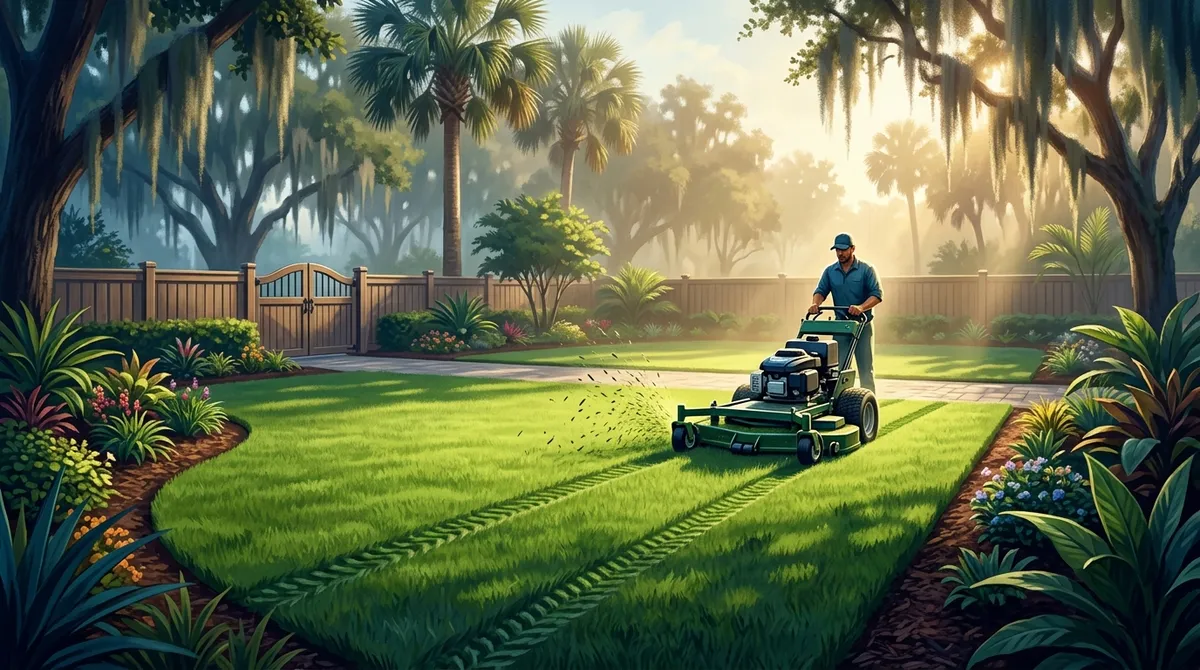
Mowing seems simple until you realize you’ve been doing it wrong for years. Cutting grass too short (called “scalping”) stresses plants, invites weeds, and creates thin, weak turf that struggles with drought and disease. The right mowing height, frequency, and technique dramatically improve your lawn’s health and appearance without requiring additional products or treatments.
The one-third rule guides proper mowing: never remove more than one-third of the grass blade length in a single cutting. If your ideal height is three inches, mow when grass reaches 4.5 inches. This preserves enough leaf surface for photosynthesis while preventing shock that weakens plants and slows growth.
Professional Mowing Standards in 2026
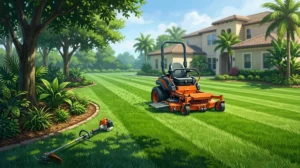
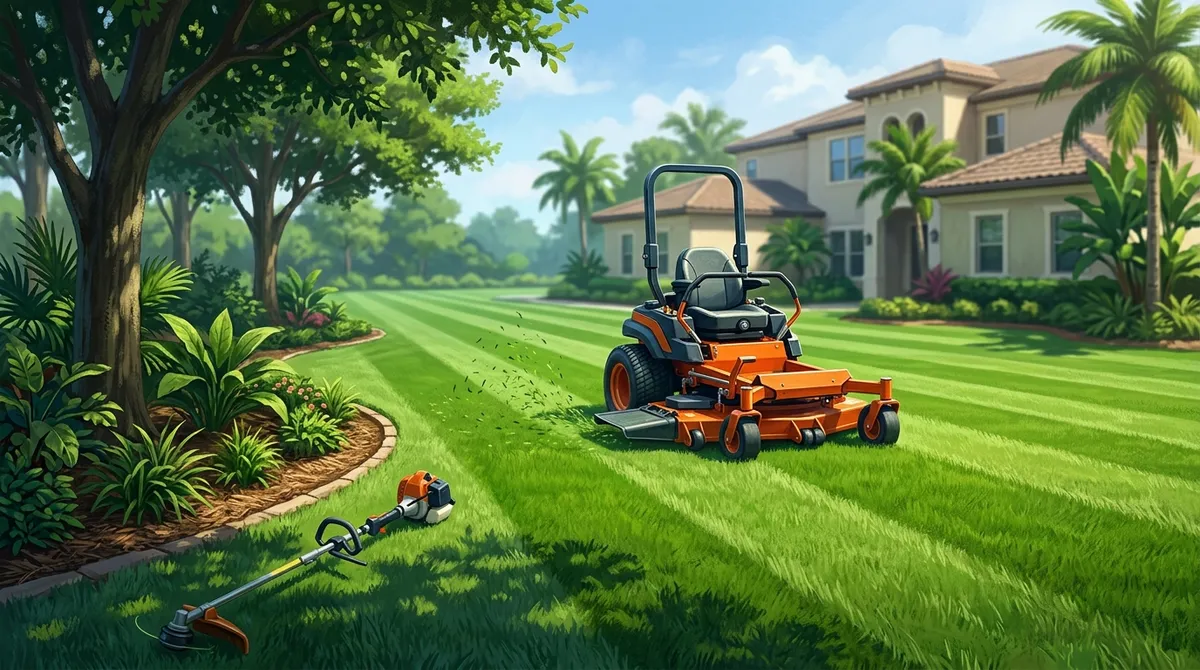
Professional lawn care services in 2026 charge between $35-$45 weekly for typical 0.25-acre suburban properties, according to recent industry data. These services include mowing, edging (around $15 as an add-on), trimming, and blowing clippings off hardscapes. Seasonal cleanups run $150-$250 depending on property size and debris volume.
All Trusted Lawn Care provides consistent, professional mowing services throughout Valrico, East Brandon, Bloomingdale, and Fishhawk. Our team understands local grass types and maintains proper mowing heights year-round, so your lawn stays healthy without you sacrificing weekends to yard work.
Here are the key mowing practices that separate amateur results from professional-quality lawns:
- Keep mower blades sharp—dull blades tear grass instead of cutting cleanly, creating brown tips and disease entry points
- Alternate mowing patterns each week to prevent soil compaction and grass grain development
- Mow when grass is dry to achieve cleaner cuts and prevent clumping
- Leave clippings on the lawn (grasscycling) to return nutrients to the soil naturally
- Adjust height seasonally—raise it during summer stress periods, lower slightly in optimal growing seasons
- Clean mower decks after each use to prevent disease spread between properties
6. Master Watering Techniques for Deeper Roots
Watering seems straightforward, but most homeowners do it incorrectly, training their grass to develop shallow roots that struggle during drought. The secret to drought-resistant, deep-rooted grass lies in watering less frequently but more deeply, encouraging roots to grow downward in search of moisture rather than staying near the surface.
Most established lawns need about one inch of water per week during the growing season, including rainfall. Rather than watering for 10 minutes daily, water for 30-45 minutes 2-3 times weekly. This approach delivers water deep into the soil profile where roots can access it during hot afternoons when shallow moisture evaporates quickly.
Testing Your Sprinkler Coverage
Place several empty tuna cans or shallow containers around your lawn before running sprinklers. After 15 minutes, measure the water depth in each container. This simple test reveals whether your irrigation system distributes water evenly or creates dry spots and overwatered areas. Adjust sprinkler heads to eliminate gaps and overlaps that waste water and create uneven growth patterns.
Early morning watering (between 4-9 AM) minimizes evaporation losses and allows grass blades to dry before nightfall, reducing fungal disease risks. Avoid evening watering that leaves grass wet overnight, creating perfect conditions for lawn diseases that require expensive fungicide treatments to control.
7. Invest in Professional Solutions When Needed
Some lawn care challenges require professional expertise, specialized equipment, or commercial-grade products unavailable to homeowners. Recognizing when to call professionals saves you time, money, and frustration compared to repeatedly attempting DIY solutions that don’t solve underlying problems.
BASF’s 2026 Early Order Program offers professional-grade disease, pest, and weed control products specifically formulated for residential and commercial turf. These advanced solutions target specific problems with precision that consumer products can’t match, delivering faster results with fewer applications.
When to Call All Trusted Lawn Care
Consider professional lawn services when you’re facing these situations:
- Your schedule doesn’t allow consistent weekly maintenance
- Physical limitations make mowing and yard work difficult or dangerous
- You lack equipment and don’t want to invest in purchasing and maintaining it
- Persistent problems (weeds, bare spots, diseases) aren’t responding to DIY treatments
- You’re preparing your home for sale and need immediate curb appeal improvements
- You want eco-friendly practices but aren’t sure how to implement them safely
- Your lawn has suffered significant damage from pests, disease, or neglect requiring rehabilitation
Starting a lawn care business requires minimal investment—a used push mower costs $150-$300, and a string trimmer runs $80-$150. However, expertise, reliability, and consistent quality separate successful professionals from weekend hobbyists. Most suburban lawns measure around 0.25 acres, suitable for residential mowers under $300 used, but managing multiple properties weekly demands commercial-grade equipment and efficiency.
Professional services also implement hybrid pricing models in 2026, combining per-visit charges with seasonal packages and recurring maintenance contracts. This approach provides predictable costs for customers while ensuring consistent revenue for service providers. Properties requiring specialized work like sod installation, landscape design, or mulch installation benefit from professional assessment and execution that prevents costly mistakes.
Choosing the Right Lawn Care Partner
When selecting a lawn care company, look beyond the lowest price. Reliable service, consistent quality, responsive communication, and local expertise matter more than saving a few dollars per visit. Ask potential providers about their experience with your specific grass type, their approach to seasonal transitions, and their backup plans for equipment breakdowns or weather delays.
Check online reviews and ask neighbors for recommendations. Companies with strong local reputations have earned them through years of dependable service. Visit All Trusted Lawn Care on Google to see what customers throughout Valrico and surrounding areas say about our commitment to quality and customer satisfaction.
Professional lawn care isn’t just about mowing—it’s about understanding your property’s unique characteristics, anticipating seasonal challenges, and implementing proactive solutions that prevent problems before they start. The right partner becomes an extension of your household maintenance team, keeping your outdoor spaces beautiful so you can focus on enjoying them rather than working on them.
Putting Your Lawn Care Solutions into Action
Creating and maintaining a beautiful lawn doesn’t require secret knowledge or expensive products—it requires understanding your grass type, following proven seasonal schedules, and implementing consistent maintenance practices. The seven solutions we’ve explored give you a complete framework for achieving professional results whether you’re doing the work yourself or partnering with a reliable service provider.
Remember that lawn care success builds gradually through consistent effort rather than dramatic one-time interventions. Small improvements compound over weeks and months, transforming struggling turf into the thick, vibrant lawn you’ve always wanted. Start with the basics—proper mowing height, adequate watering, and seasonal fertilization—then address specific challenges like weed control and bare spot repair as your lawn improves.
Your outdoor space should enhance your life, not consume it. Whether you’re a busy professional, a new homeowner learning the ropes, or someone who simply wants better results without the hassle, the right lawn care approach makes all the difference. For homeowners across Valrico, East Brandon, Bloomingdale, and Fishhawk who want professional quality without the weekend work, All Trusted Lawn Care provides reliable service and beautiful results you can count on.
Ready to transform your lawn from frustrating to fantastic? The solutions are here, the timing is right, and your neighbors are already noticing. Take the first step toward the lawn you’ve always wanted—your future self will thank you every time you pull into your driveway.
FAQs
Q: What’s the best time to fertilize my lawn in Florida?
A: For warm-season grasses like St. Augustine and Bermuda common in Valrico, fertilize from late spring through summer when grass grows most actively. Apply your first feeding in April or May when temperatures consistently reach 70°F, then follow up every 6-8 weeks through August. Avoid fertilizing during winter dormancy when grass can’t absorb nutrients effectively.
Q: How do I get rid of crabgrass without killing my lawn?
A: Use selective herbicides containing quinclorac (like Drive or Quincor) that target crabgrass while leaving desirable grass unharmed. Apply when crabgrass plants are young (fewer than four leaves) for best results. Better yet, prevent crabgrass entirely with pre-emergent treatments in early spring before seeds germinate, typically when soil temperatures reach 55-60°F for several days.
Q: How often should I mow my lawn for the healthiest grass?
A: Mow often enough to remove no more than one-third of the grass blade at each cutting. For most warm-season grasses in active growth, this means weekly mowing during peak season. Maintain proper height (2.5-4 inches for St. Augustine, 1-2 inches for Bermuda) and use sharp blades for clean cuts that promote healthy growth and disease resistance.
Q: What’s the difference between warm-season and cool-season grass care?
A: Warm-season grasses (St. Augustine, Bermuda, Zoysia) thrive in summer heat and require fertilization from late spring through summer, while cool-season varieties (fescue, bluegrass) grow best in spring and fall with different feeding schedules. Warm-season grass goes dormant and browns in winter, while cool-season grass stays green year-round in moderate climates but struggles with summer heat and humidity.
Q: When should I hire professional lawn care instead of doing it myself?
A: Consider professional services when your schedule prevents consistent weekly maintenance, physical limitations make yard work difficult, or persistent problems aren’t responding to DIY treatments. Professionals offer specialized equipment, commercial-grade products, and expertise that saves time and delivers better results. For busy families in Valrico and surrounding areas, professional care eliminates weekend work while maintaining beautiful lawns year-round.