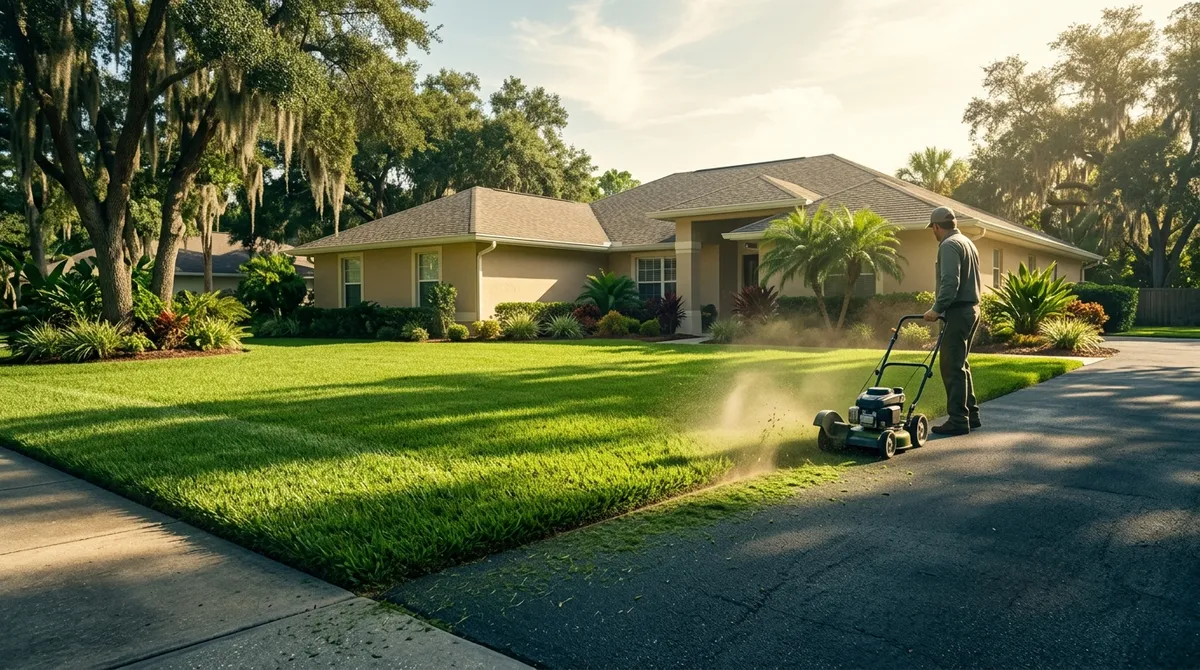
Key Takeaways
- Create a lawn care schedule tailored to your specific grass type, as warm-season and cool-season grasses require different maintenance approaches.
- Mow consistently at the right height, never removing more than one-third of grass blade length in a single cut to maintain lawn health.
- Water deeply 2-3 times per week in early morning, providing 1-1.5 inches of water to encourage deep root growth and drought resistance.
- Apply seasonal treatments like pre-emergent herbicides, fertilizers, and aeration at the right times to prevent weeds and strengthen grass.
- Track your lawn’s performance by taking notes, photos, and adjusting your maintenance schedule based on weather and grass conditions.
Creating a schedule for your lawn care doesn’t have to feel overwhelming. Whether you’re a busy parent juggling work and family or a new homeowner trying to figure out yard maintenance, having a simple plan makes all the difference. A good lawn care schedule helps you keep your grass healthy, saves you money, and frees up your weekends for the things you actually enjoy doing.
In Valrico and the surrounding areas, our lawns face unique challenges throughout the year. The hot summers, occasional droughts, and seasonal changes all affect how we care for our grass. That’s why understanding when to mow, water, and maintain your yard is so important. Let’s walk through seven straightforward steps that will help you create a lawn care schedule that actually works for your lifestyle.
Many homeowners in East Brandon and Fishhawk struggle with keeping their lawns looking great because they don’t know when to do what. You might be wondering when to start mowing in spring or how often to water during summer. Don’t worry – we’ve got you covered with a simple system that takes the guesswork out of lawn care.

Understanding Your Grass Type Makes Scheduling Easier
Before you can create an effective lawn care schedule, you need to know what type of grass you’re working with. This single piece of information changes everything about how you care for your yard. In our area, most homeowners have warm-season grasses like Bermuda or Zoysia, which love our hot summers and grow best when temperatures stay above 80 degrees.
Warm-season grasses need different care than cool-season varieties. They wake up later in spring, grow like crazy during summer, and slow down when fall arrives. Knowing this helps you time your mowing, watering, and other tasks perfectly. If you’re not sure what type of grass you have, take a close look at the blade shape and color, or ask a lawn maintenance professional for help.
Cool-Season Versus Warm-Season Grass Care
Cool-season grasses like fescue and Kentucky bluegrass thrive during spring and fall when temperatures range between 60-75 degrees. These grasses need mowing to a height of 2.5 to 3.5 inches, and you’ll cut them every 5 to 7 days during their peak growing seasons. They prefer more attention in early spring and again in fall.
Warm-season grasses like Bermuda and Zoysia, common in Florida yards, prefer heights of 1 to 2 inches and need cutting every 7 to 10 days during active growth. They love summer heat and actually go dormant when temperatures drop below 50 degrees. Understanding these differences helps you avoid common mistakes like mowing too short or fertilizing at the wrong time.

Step 1: Create Your Spring Lawn Care Schedule
Spring is when your lawn wakes up from winter dormancy and starts growing again. For warm-season grasses in our area, this usually happens when soil temperatures consistently reach 50 degrees and above. Your first mow should happen when the grass reaches about 2 to 2.5 inches tall, which typically occurs in late March or early April.
During spring, focus on these key tasks:
- Start mowing when grass is actively growing (usually every 7-10 days)
- Apply pre-emergent weed control to prevent crabgrass and other weeds
- Check your irrigation system and adjust watering to 1 to 1.5 inches per week
- Remove any debris, dead patches, or winter damage
- Consider aerating if your soil is compacted from winter
Spring is also perfect for sod installation if you’re starting fresh or repairing damaged areas. The moderate temperatures and natural rainfall help new grass establish strong roots before summer heat arrives.
Early Spring Fertilization Tips
Most lawns benefit from an early spring fertilizer application, but timing matters. Wait until your grass shows active growth before applying fertilizer – usually when you’ve mowed 2-3 times. Using fertilizer too early wastes money and can actually feed weeds instead of your grass.
A soil test tells you exactly what nutrients your lawn needs, taking the guesswork out of fertilization. While All Trusted Lawn Care focuses on mowing and maintenance, we’re happy to connect you with trusted local partners who specialize in fertilization and soil care services.

Step 2: Set Up Your Summer Maintenance Routine
Summer is when warm-season grasses in Valrico, East Brandon, and Bloomingdale really shine. Your grass grows fastest during these hot months, which means your schedule needs to include more frequent attention. The key is staying consistent without overdoing it.
Here’s what your summer schedule should include:
- Mow warm-season grass every 7-10 days, keeping the height at 1-2 inches
- Water deeply 2-3 times per week in early morning (before 10 AM)
- Apply slow-release nitrogen fertilizer in mid-summer
- Watch for brown patches that might indicate grub damage or disease
- Raise your mower blade slightly during extreme heat to protect grass roots
Never remove more than one-third of the grass blade length in a single mowing. This rule helps your lawn stay healthy and develop deep roots that withstand heat and drought stress. If your grass gets too tall between cuts, mow it twice over a few days rather than cutting it all at once.
Smart Summer Watering Strategies
Lawns need about 1 to 1.5 inches of water per week for optimal health, including rainfall. Deep, infrequent watering encourages roots to grow deeper into the soil, making your grass more drought-resistant. Shallow, frequent watering creates weak, surface-level roots that struggle during dry spells.
Water early in the morning between 6-10 AM to minimize evaporation and give grass blades time to dry before evening. Wet grass overnight invites fungal diseases and other problems. Place a tuna can on your lawn while watering to measure exactly how much water you’re applying.

Step 3: Plan Your Fall Lawn Care Activities
Fall brings cooler temperatures and less stress on warm-season grasses. This is the perfect time for certain maintenance tasks that prepare your lawn for winter and set it up for success next spring. As growth slows down, you can adjust your schedule accordingly.
Your fall lawn care schedule should include:
- Continue mowing as needed, but less frequently as growth slows
- Apply fall fertilizer in early fall to strengthen roots
- Aerate compacted soil while grass is still actively growing
- Overseed cool-season grasses in September when weed competition is low
- Apply post-emergent herbicides for any remaining weeds
- Schedule leaf clean-up services to prevent smothering
Aeration is especially valuable in fall because it improves soil access to air, water, and nutrients right when your grass needs to build strong roots for winter. Small holes in the soil also help break up thatch and improve overall lawn health.
Why September Is Perfect for Overseeding
If you have cool-season grass, September offers ideal conditions for overseeding. Temperatures cool down, weed competition decreases, and there’s usually enough moisture to help new seeds germinate. The young grass has time to establish before winter arrives.
For warm-season grasses, skip the overseeding and focus instead on strengthening existing turf. These grasses spread through stolons and rhizomes rather than seeds, so they fill in bare spots naturally when given proper care.
Step 4: Develop a Year-Round Mowing Schedule
Consistent mowing is the backbone of any good lawn care schedule. The frequency changes with the seasons, but the principles stay the same. Understanding proper mowing height and timing prevents most common lawn problems and keeps your yard looking professionally maintained.
Follow these mowing guidelines throughout the year:
- Set mower height based on grass type (1-2 inches for warm-season, 2.5-3.5 inches for cool-season)
- Keep mower blades sharp – dull blades tear grass and invite disease
- Alternate mowing patterns each week to prevent soil compaction
- Never mow wet grass, which clumps and spreads disease
- Leave grass clippings on the lawn as free fertilizer (unless they’re excessive)
- Adjust frequency based on growth rate, not a fixed schedule
Many busy homeowners in Fishhawk and Bloomingdale find that professional lawn maintenance services take the stress out of keeping up with mowing. All Trusted Lawn Care provides consistent, reliable mowing that keeps your yard looking great without you having to think about it.
| Season | Warm-Season Grass | Cool-Season Grass | Mowing Frequency |
|---|---|---|---|
| Spring | Begin when 2-2.5 inches tall | Active growth period | Every 5-7 days |
| Summer | Peak growth, 1-2 inches high | Slow growth, raise height | Every 7-10 days |
| Fall | Slowing growth | Active growth returns | Every 7-14 days |
| Winter | Dormant, minimal cutting | Slow growth | As needed or none |
Step 5: Schedule Regular Watering Throughout the Year
Proper watering is crucial for a healthy lawn, but many homeowners either overwater or underwater their grass. Creating a watering schedule based on your grass type, soil conditions, and weather patterns helps you use water efficiently while keeping your lawn green and strong.
Here’s how to schedule watering effectively:
- Water 2-3 times per week, providing 1-1.5 inches total
- Adjust based on rainfall – skip watering after good rain
- Water deeply to encourage root growth down 6 inches or more
- Morning watering between 6-10 AM is best
- Reduce frequency during cooler months when grass needs less
- Watch for signs of drought stress like blue-gray color or footprints that stay visible
Automatic irrigation systems make scheduling easier, but they still need monitoring and adjustment. Check your system monthly for broken sprinkler heads, uneven coverage, or timing issues. Remember that different areas of your yard may need different amounts of water based on sun exposure and soil type.
Drought-Proofing Your Lawn Care Schedule
During dry periods common in our area, adjust your schedule to help grass survive with less water. Raise your mower height slightly to shade soil and reduce evaporation. Let grass go dormant if necessary – most warm-season varieties bounce back once water returns.
Deep, infrequent watering creates drought-resistant grass better than frequent shallow watering. Train your lawn to be tough by watering less often but more thoroughly. This builds stronger root systems that reach deep into the soil for moisture.
Step 6: Include Seasonal Treatments in Your Schedule
Beyond mowing and watering, your lawn needs seasonal treatments to stay healthy and fight off problems. While All Trusted Lawn Care specializes in mowing and maintenance, understanding when these treatments should happen helps you plan ahead and find the right professionals for specialized services.
Schedule these seasonal treatments throughout the year:
- Pre-emergent herbicide in early spring before soil reaches 55 degrees
- Post-emergent weed control in late spring and summer as needed
- Grub control in mid-to-late summer when grubs are young
- Disease treatment at first signs of brown patches or fungal issues
- Lime application if soil test shows pH below 6.0
- Winter preparation treatments in late fall
Timing matters significantly with treatments. Pre-emergent herbicides only work if applied before weed seeds germinate. Grub control is most effective when the pests are in their early growth stages. Disease treatments need quick action at first symptoms.
Working with Treatment Professionals
We’re happy to connect you with trusted local partners who specialize in fertilization, weed control, pest control, aeration, and soil care services. These experts can create a customized treatment schedule based on your specific lawn conditions and problems.
Professional treatments often work better than DIY approaches because specialists understand proper timing, application rates, and which products work best in our local conditions. They also have commercial-grade products not available to homeowners.
Step 7: Track and Adjust Your Schedule Regularly
The best lawn care schedule isn’t set in stone – it changes based on weather, grass performance, and what you learn over time. Keep simple notes about what works and what doesn’t. This helps you improve your schedule each year and avoid repeating mistakes.
Here’s what to track and how to adjust:
- Write down mowing dates and grass height to find your ideal frequency
- Note watering amounts and watch for signs of too much or too little
- Record when weeds appear to improve pre-emergent timing next year
- Take photos monthly to see improvement or identify problem areas
- Adjust schedule based on unusual weather (extra rain, drought, heat waves)
- Be flexible – your lawn tells you what it needs
Many homeowners find that partnering with a professional lawn care service provides consistency they can’t achieve alone. All Trusted Lawn Care serves Valrico, East Brandon, Bloomingdale, and Fishhawk with reliable service that keeps lawns looking their best year-round. We handle the schedule so you don’t have to think about it.
| Month | Primary Tasks | Frequency |
|---|---|---|
| March-April | First mow, pre-emergent, clean-up | Weekly to bi-weekly |
| May-August | Regular mowing, deep watering, monitoring | Every 7-10 days |
| September-October | Aeration, fall fertilizer, overseeding | One-time tasks, regular mowing |
| November-February | Reduced mowing, winter prep, planning | As needed or monthly |
Creating an effective lawn care schedule doesn’t require expensive tools or expert knowledge. It just takes understanding your grass type, knowing when to perform key tasks, and staying consistent throughout the year. Whether you handle everything yourself or work with professionals, having a plan makes lawn care much less stressful.
Remember that lawn care in 2026 is about working smarter, not harder. Use the seven steps we’ve covered to build a schedule that fits your lifestyle and your lawn’s needs. Start simple, track your results, and adjust as you learn what works best for your specific yard conditions.
If you’re ready to stop worrying about lawn care schedules and enjoy a beautiful yard without the hassle, reach out to our team for professional service you can count on. We’ve helped countless homeowners across our service area maintain healthy, attractive lawns with consistent care and fair pricing. You can also check out our reviews on Google to see what your neighbors are saying about our service.
For many homeowners, lawn care scheduling becomes much easier when you have a reliable team handling the regular maintenance. We don’t discuss specific pricing, but on average, lawn mowing in the area typically ranges between $35 and $75 per cut. All Trusted Lawn Care falls right around the middle, offering professional service and reliable results at a fair value. Give us a call at 813-833-1882 to discuss how we can help keep your lawn looking great all year long.
Your lawn deserves consistent care that keeps it healthy through every season. With a solid schedule and the right approach, you can have the beautiful yard you’ve always wanted. Whether you choose to handle maintenance yourself or partner with professionals, the key is getting started and staying consistent. According to lawn care experts, proper scheduling and regular maintenance are the foundation of any healthy lawn. You can also connect with us on Facebook to see our latest work and lawn care tips.
FAQs
Q: How often should I mow my lawn during summer?
A: During summer, warm-season grasses like Bermuda and Zoysia grow fastest and need mowing every 7 to 10 days. Keep the blade height at 1 to 2 inches and never remove more than one-third of the grass length in one cut. If your grass grows extra fast after rain, you might need to mow more frequently to keep it looking neat.
Q: What’s the best time of day to water my lawn?
A: Early morning between 6 AM and 10 AM is the best time to water your lawn. This timing minimizes water loss from evaporation and gives grass blades time to dry before evening, which prevents fungal diseases. Avoid watering in the afternoon when heat causes evaporation, or at night when wet grass stays damp too long.
Q: When should I start mowing my lawn in spring?
A: Start mowing your lawn in spring when temperatures consistently reach 50 degrees and your grass grows to about 2 to 2.5 inches tall. For warm-season grasses in our area, this usually happens in late March or early April. Wait until you see active growth rather than following a strict calendar date, since weather varies each year.
Q: How much water does my lawn need each week?
A: Your lawn needs about 1 to 1.5 inches of water per week, including rainfall. Water deeply 2 to 3 times per week rather than lightly every day. Deep watering encourages roots to grow deeper into the soil, making your grass more drought-resistant and healthier overall.
Q: Should I leave grass clippings on the lawn after mowing?
A: Yes, leaving grass clippings on your lawn is beneficial unless they’re excessive or clumping. Clippings act as free fertilizer, returning nutrients to the soil as they decompose. They also help retain moisture and don’t contribute to thatch buildup as many people think. Just make sure your mower blades are sharp for clean cuts.