Key Takeaways
-
St. Augustine grass, the most common in Florida, should be mowed at 3.5-4 inches; cutting below 2.5 inches causes serious stress and scalping damage.
-
Follow the 1/3 rule: never cut more than one-third of the grass blade in one session to prevent stress and damage during Florida's fast-growing seasons.
-
Mowing too short removes green leaf blades needed for energy production and creates shallow root systems that can't access deep moisture during dry spells.
-
Scalped lawns develop yellowing, weed invasion, fungal diseases, and slow recovery taking weeks or months; summer weekly mowing prevents this damage.
-
Adjust mowing frequency seasonally: weekly in spring and summer for fast growth, bi-weekly in fall, and as-needed in winter when growth slows significantly.
-
Use sharp mower blades and mow dry grass in different patterns each time; dull blades tear grass creating brown edges, and wet mowing causes uneven cuts.
If you’ve ever finished mowing and thought, “Did I cut it a little too short this time?” — you’re not alone. It’s one of the most common lawn care questions homeowners ask, especially here in Florida. Our warm climate, humidity, and year-round growing seasons make mowing height really matter. Cut too short, and your grass can struggle, turn yellow, or even die. Get the height right, and you’ll have a thick, green lawn that your neighbors will admire. Let’s break it all down in simple terms so you know exactly where to set that mower blade — and why it matters so much for Florida lawns.
Why Mowing Height Matters So Much in Florida
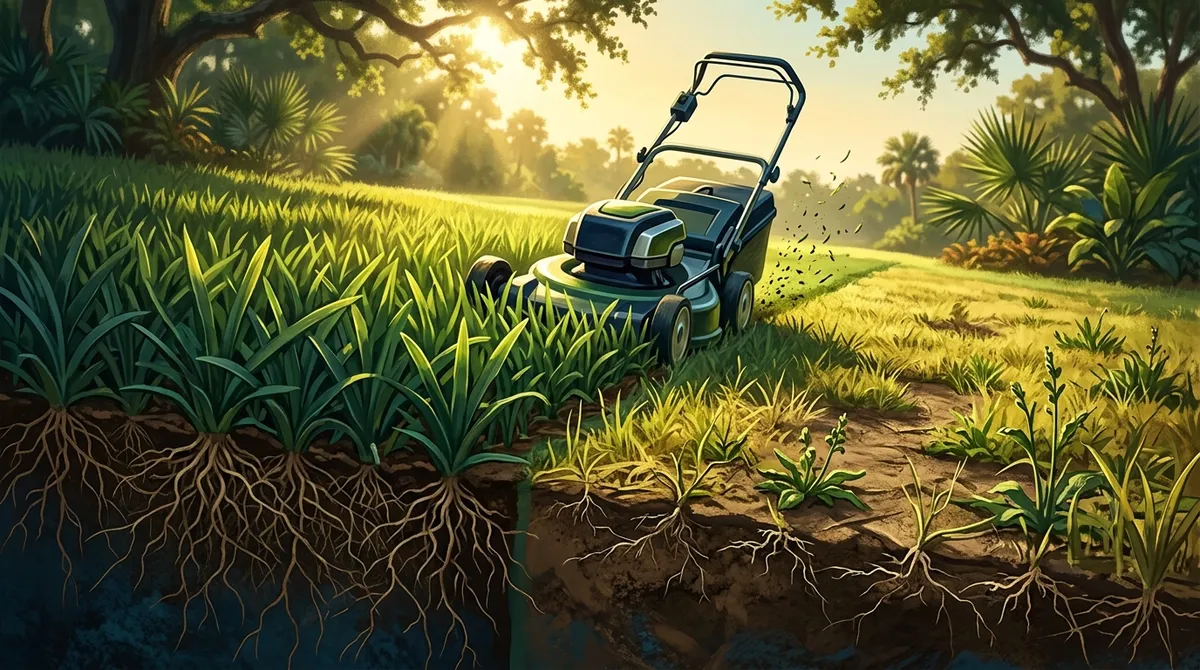
Florida isn’t like most states when it comes to lawn care. The heat, sun, and rain here are intense. Your grass is working hard all year long. Cutting it too short puts enormous stress on it. When you scalp your lawn, you remove the green leaf blades that absorb sunlight and produce energy for the plant. Less leaf means less food, and a hungry lawn is a weak lawn.
Short grass also has a shallower root system. Roots tend to grow as deep as the grass is tall. So a lawn mowed at 1 inch will have much shallower roots than one mowed at 3.5 inches. Shallow roots can’t reach deep moisture, making your lawn more vulnerable during dry spells. You can learn more about this in our guide on why regular mowing of grass is so important for your lawn.

Florida Grass Types and Their Ideal Mowing Heights
Not all Florida lawns are the same. The grass type in your yard determines the right mowing height. Here’s a quick breakdown of the most common Florida grass types and their recommended cutting heights:
| Grass Type | Ideal Mowing Height | Too Short (Scalp Zone) |
|---|---|---|
| St. Augustine | 3.5 – 4 inches | Below 2.5 inches |
| Bahia Grass | 3 – 4 inches | Below 2.5 inches |
| Bermuda Grass | 1 – 1.5 inches | Below 0.75 inches |
| Zoysia Grass | 2 – 3 inches | Below 1.5 inches |
| Centipede Grass | 1.5 – 2 inches | Below 1 inch |
St. Augustine is by far the most popular grass in Bloomingdale, Valrico, and surrounding communities. If that’s what you have, aim for 3.5 to 4 inches. Going below 2.5 inches puts it in serious stress territory. For more specifics, check out our detailed guide on the best mowing height for St. Augustine grass.
What Happens When You Mow Too Short
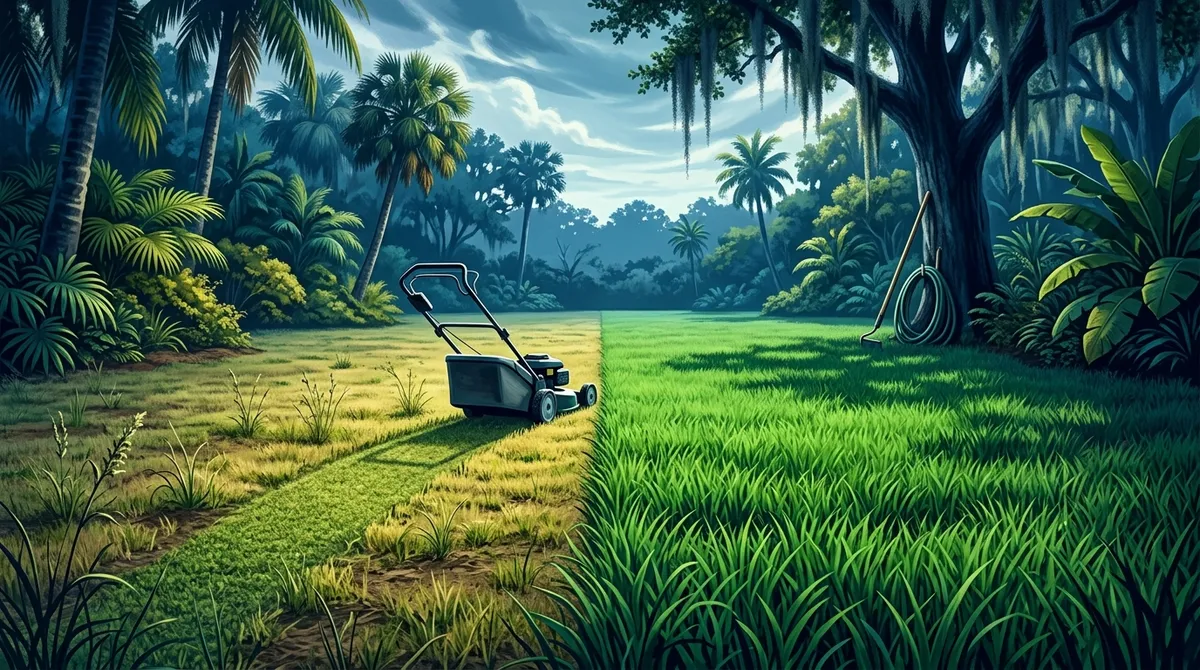
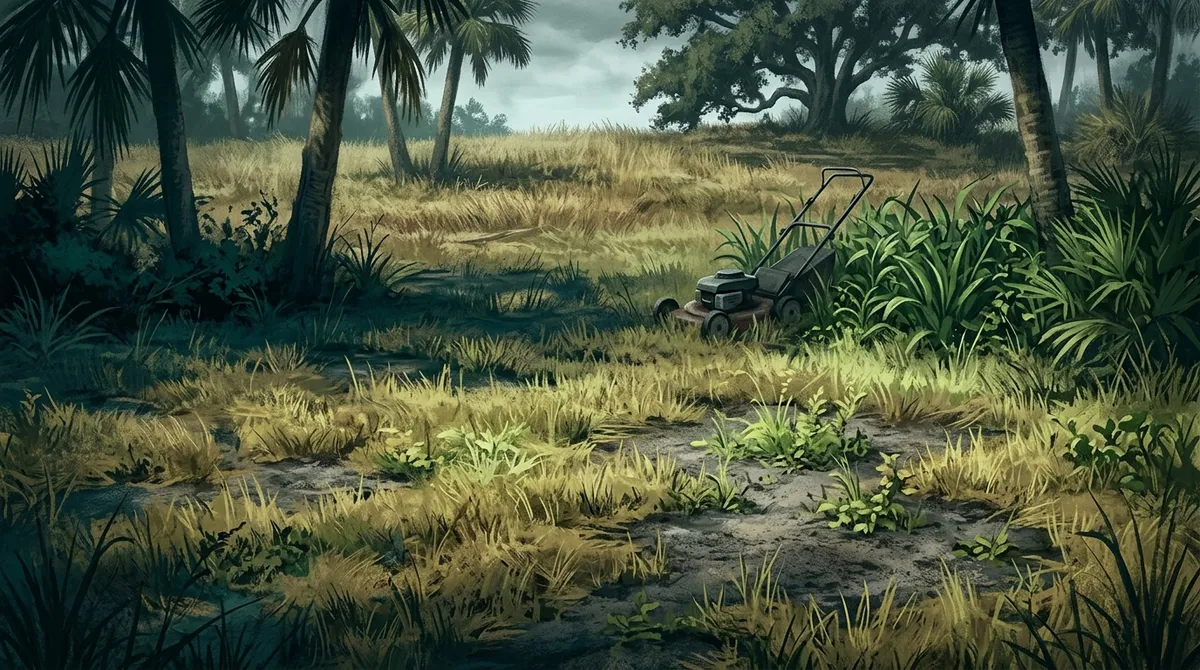
Cutting your grass too low isn’t just bad — it can cause real damage that takes weeks or even months to recover from. Here’s what typically goes wrong when you mow too short in Florida:
- Yellowing or browning: The grass loses its green blades and turns pale or brown quickly.
- Weed invasion: Short grass creates open spaces where weeds love to move in.
- Increased disease risk: Scalped lawns are more vulnerable to fungal issues in Florida’s humid climate.
- Shallow root growth: Roots stay near the surface and can’t handle drought or heat stress.
- Slow recovery: A scalped lawn takes much longer to bounce back, sometimes needing professional sod installation in severe cases.
If you’ve already cut too short and are seeing signs of damage, our article on what happens if you mow your lawn too short in Florida walks you through what to expect and how to help your lawn recover.
The 1/3 Rule: The Golden Rule of Mowing
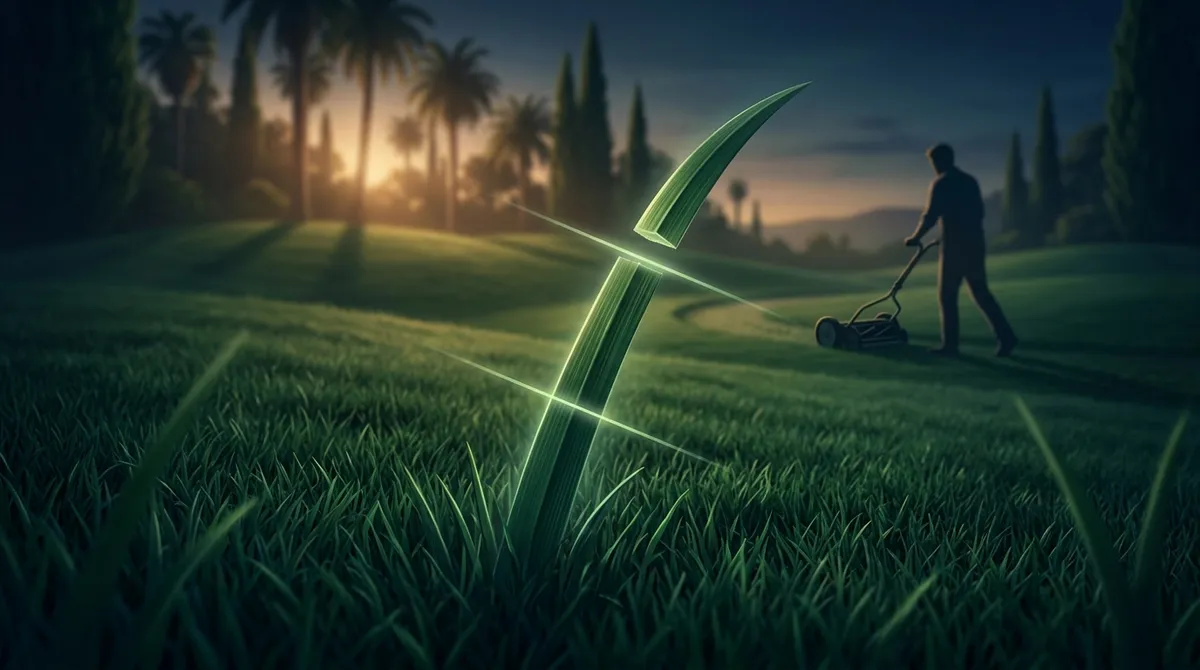
One of the most important principles in lawn care is the 1/3 rule. It simply means: never cut more than one-third of the grass blade in a single mowing session.
Here’s how it works in practice:
- If your target height is 4 inches, don’t let the grass grow taller than 6 inches before mowing.
- If your target height is 3.5 inches, mow before it reaches 5.25 inches.
- If you miss a week and the grass is too tall, raise the blade and take it down gradually over 2-3 sessions.
Skipping this rule is how most lawn damage happens — especially after vacations or rainy weeks when mowing gets delayed. You can dive deeper into this concept with our guide on how to use the 1/3 rule for a healthier, greener lawn.
Seasonal Mowing Tips for Florida Lawns
Florida lawns behave differently throughout the year. Your mowing habits should adjust with the seasons. Here are some practical tips to keep your lawn healthy all year long:
- Spring (March – May): Growth picks up fast. Mow more frequently — weekly is ideal. Keep height at your grass type’s recommended level.
- Summer (June – August): Peak growing season. Weekly mowing is a must. Consider raising your blade slightly to help grass handle heat stress.
- Fall (September – November): Growth starts to slow. Bi-weekly mowing may become possible. Maintain proper height to prepare for cooler weather.
- Winter (December – February): Growth slows significantly. Mow as needed but avoid cutting too short, which can damage dormant or slow-growing grass.
For a full seasonal breakdown, our guide to mastering Florida lawn care covers everything you need to know in 2026.
Common Mowing Mistakes Bloomingdale Homeowners Make
After working with homeowners across Bloomingdale, Valrico, and Fishhawk, we’ve seen the same mowing mistakes pop up again and again. Here are the most common ones to avoid:
- Setting the blade too low: Many people think shorter grass looks “cleaner,” but it actually invites damage and weeds.
- Mowing with dull blades: Dull blades tear the grass instead of cutting it cleanly, leaving ragged edges that turn brown.
- Mowing wet grass: Wet lawns cut unevenly and clump badly. Wait until the morning dew dries.
- Skipping weeks during peak growing season: In summer, Florida grass can grow several inches in a week. Skipping leads to overgrowth and then scalping to catch up.
- Mowing in the same pattern every time: This compacts soil and creates ruts. Change directions regularly.
You can find even more helpful tips in our article on 11 lawn mowing mistakes that damage your grass.
How Often Should You Mow in Florida?
Mowing frequency goes hand-in-hand with mowing height. Here’s a general schedule that works well for most Florida lawns:
| Season | Recommended Frequency | Notes |
|---|---|---|
| Spring | Weekly | Growth accelerates quickly |
| Summer | Weekly | Peak growing season — don’t skip |
| Fall | Weekly to Bi-Weekly | Growth slows after October |
| Winter | Bi-Weekly or As Needed | Mow only when grass is actively growing |
Staying on a regular schedule is one of the best things you can do for your lawn’s health. If life gets busy, a professional lawn maintenance plan can keep your yard on track without any stress on your end.
Signs Your Lawn Was Cut Too Short
Not sure if last week’s mow went a little too low? Here are the signs to look for:
- Patchy yellow or brown areas appearing within 2-3 days of mowing
- Soil becoming visible through the grass canopy
- A rough, stubby texture when you walk across the lawn
- Increased weed growth in areas that were cut shortest
- Grass that feels dry and brittle even after watering
If you’re noticing these signs repeatedly, it may be time to revisit your mower’s blade height setting. You might also find our article on what is the correct grass height for a healthy lawn a helpful read.
When to Call a Professional
Sometimes the easiest solution is also the best one — letting a trusted professional handle the mowing for you. A trained lawn care team knows exactly how short is too short when mowing a lawn in Florida. They’ll dial in the right blade height for your specific grass type, season, and yard conditions every single visit.
At All Trusted Lawn Care, we serve homeowners throughout Bloomingdale, Valrico, Brandon, Fishhawk, Boyette, and Riverview with reliable, professional lawn maintenance. We take the guesswork out of mowing so your lawn always looks its best. Visit us on Google — All Trusted Lawn Care to see what our customers are saying about our services.
Not sure which service is right for your yard? Our team is happy to help. Learn how to choose the best lawn care service for your needs or check out all of our services to find the right fit. You can also connect with us on Facebook for tips, updates, and community conversations about lawn care in our area.
Curious about whether a professional lawn mowing service is worth it? We think you’ll love the results — and the time you get back. Interestingly, the humble lawn mower has evolved dramatically over the decades, but the principles of correct mowing height remain timeless and grounded in the biology of grass itself.
Quick Reference: How Short Is Too Short in Florida?
Here’s a simple numbered list to keep as a reference when you’re setting your mower blade:
- St. Augustine grass: Never go below 2.5 inches. Ideal range is 3.5–4 inches.
- Bahia grass: Keep it above 2.5 inches. Aim for 3–4 inches for best results.
- Bermuda grass: Don’t go below 0.75 inches. Target height is 1–1.5 inches.
- Zoysia grass: Stay above 1.5 inches. The sweet spot is 2–3 inches.
- Centipede grass: Never drop below 1 inch. Best maintained at 1.5–2 inches.
Sticking to these ranges will help your lawn stay green, thick, and healthy through every Florida season. If you’d like to learn even more about keeping your grass in top shape, explore our lawn care tips page for more expert guidance. For those in Bloomingdale specifically, our Bloomingdale lawn care page has resources tailored to your neighborhood’s unique conditions. A helpful external resource from the University of Florida’s UF/IFAS Gardening Solutions also provides science-backed guidance on Florida-specific lawn care practices.
Conclusion: Keep It at the Right Height and Your Lawn Will Thrive
Knowing how short is too short when mowing your lawn in Florida is one of the most valuable things you can learn as a homeowner. The right mowing height protects your grass roots, prevents weeds, and keeps your lawn looking lush and vibrant — no matter the season. The key takeaway is simple: when in doubt, leave it a little longer. Your lawn will thank you for it.
Whether you’re a busy professional, a new homeowner still learning the ropes, or someone who just wants a beautiful yard without the hassle, professional lawn care is always an option worth considering. Reach out to our team today for a free estimate, or give us a call at 813-833-1882 — we’d love to help your Bloomingdale lawn look its absolute best all year long.
FAQs
Q: How short is too short when mowing St. Augustine grass in Florida?
A: Great question! For St. Augustine grass — the most popular lawn type in Florida — anything below 2.5 inches is too short. The ideal range is 3.5 to 4 inches, which keeps the grass thick, healthy, and better able to handle Florida’s heat and humidity.
Q: Can cutting my Florida lawn too short cause it to die?
A: It absolutely can, especially in severe cases! Cutting too short (also called scalping) removes the green blades your grass needs to produce energy. Over time, this weakens the root system and makes your lawn vulnerable to weeds, disease, and drought — and recovery can be a slow process.
Q: Should I mow my Florida lawn differently in summer vs. winter?
A: Yes, and it’s a smart thing to think about! In summer, your grass is growing fast, so weekly mowing at full height keeps it healthy. In winter, growth slows way down, so you can mow less often — but never cut shorter than your grass type’s recommended minimum, even in cooler months.
Q: What is the 1/3 rule for mowing, and why does it matter in Florida?
A: The 1/3 rule means you should never remove more than one-third of the grass blade in a single mowing session. In Florida’s fast-growing summers, this is especially important — if you let your lawn get too tall and then cut it way down all at once, you’ll stress and potentially damage your grass significantly.
Q: How do I know if my lawn was mowed too short?
A: Watch for yellowing or browning patches that appear a day or two after mowing, visible soil between grass blades, or a rough and stubbly feel underfoot. If weeds start showing up more than usual in recently mowed areas, that’s another strong sign the mowing height was too low.