Key Takeaways
-
The 1/3 rule is critical: never cut more than one-third of the grass blade per mowing session, as cutting more stresses roots and causes yellowing or browning of your lawn.
-
Mowing twice a week makes sense during Florida's peak growing season (late spring through early fall) when warm-season grasses like St. Augustine grow 1-2 inches weekly, but adjust frequency seasonally.
-
Common warm-season grasses in Bloomingdale (St. Augustine, Bahia, Zoysia, Bermuda) have different growth rates and mowing needs; knowing your grass type is essential for determining proper mowing frequency.
-
Always mow with a sharp blade and maintain the correct height for your grass type to prevent damage; dull blades tear grass causing disease risk, and scalping can cause lasting damage taking weeks to recover.
-
Signs your mowing schedule needs adjustment include grass looking shaggy 3-4 days after mowing (need twice-weekly) or yellowing after cutting (cutting too short or too often).
-
During dormant winter months or dry seasons in Bloomingdale, mowing every 2-4 weeks is sufficient; adjust schedules based on actual grass growth, not a fixed calendar.
If you’ve ever looked out at your yard and wondered whether you’re mowing too often, you’re not alone. Many homeowners in Bloomingdale, Florida ask this exact question — especially during the warm, rainy months when grass seems to grow overnight. The short answer? It depends on your grass type, the season, and how fast your lawn is actually growing. Mowing too often can stress your grass, but so can letting it grow too long. Getting the balance right makes a huge difference in how your lawn looks and feels all year long. Whether you’re a busy parent juggling work and family, a new homeowner figuring things out for the first time, or a senior who just wants a tidy yard without the heavy lifting, this guide will help you understand exactly when mowing twice a week makes sense — and when it doesn’t.

How Fast Does Grass Actually Grow in Bloomingdale?
Grass growth depends on several factors. These include the type of grass, the amount of rain, the temperature, and how much sunlight your yard gets. In Bloomingdale and surrounding areas, warm-season grasses like St. Augustine, Bahia, and Zoysia are most common. These grasses thrive in heat and can grow surprisingly fast during the summer months.
During peak growing season — typically from late spring through early fall — grass in the Bloomingdale area can grow several inches in just a week. That’s when the question of mowing twice a week comes up most often. If your grass is growing that fast, keeping up with it may genuinely require two cuts per week to stay healthy. You can learn more about this in our guide on how to use the 1/3 rule for a healthier, greener lawn.
What Is the 1/3 Rule and Why Does It Matter?
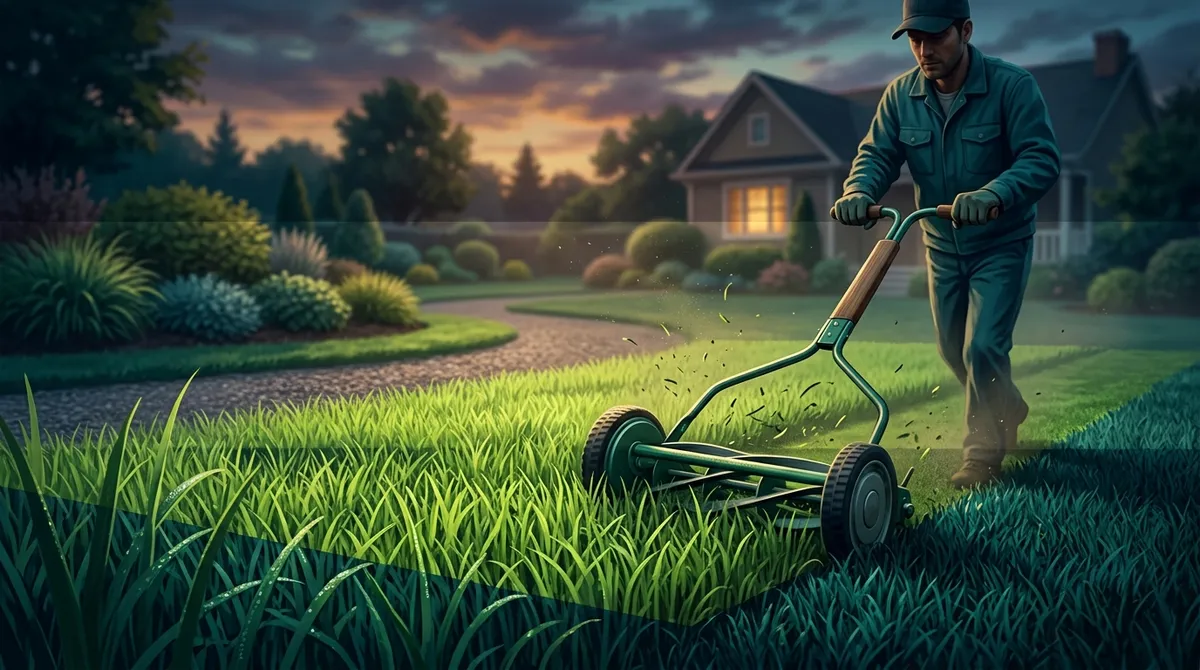
The 1/3 rule is one of the most important principles in lawn care. It simply means you should never cut more than one-third of the grass blade in a single mowing session. Cutting more than that can shock the plant and leave your lawn looking yellow or brown.
So, if your grass has grown very tall, mowing twice a week could actually protect it. Removing too much at once stresses the roots and weakens the grass over time. By mowing more frequently, you remove smaller amounts each time and keep the grass healthier. Think of it like trimming your hair — a little at a time keeps it looking great, while a dramatic chop can lead to damage.
When Mowing Twice a Week Makes Sense
Mowing twice a week is not always overkill. In fact, there are several situations where it can actually benefit your lawn:
- Peak growing season — During summer in Florida, grasses like St. Augustine can grow one to two inches per week, sometimes more. Mowing twice keeps things manageable.
- After heavy rain periods — Bloomingdale gets significant rainfall from spring through fall. A wet week can send your grass into overdrive, requiring two cuts.
- Newly installed sod — Fresh sod needs careful maintenance. Frequent mowing at the right height helps it establish strong roots.
- Commercial or curb appeal goals — If you’re running a business or just love an immaculate lawn, twice-a-week mowing can keep things looking pristine.
- Bermuda grass in summer — This fast-growing grass type may genuinely need more frequent cuts to stay at the right height.

When Mowing Twice a Week Is Too Much
On the flip side, mowing too frequently can be harmful. Here are signs that twice a week may be overdoing it for your yard:
- Your grass is not actively growing (dormant in cooler months)
- You’re cutting the same short grass again just days later
- You’re noticing stress signs like yellowing or thinning patches
- It’s dry season and the grass is growing slowly
- You’re scalping the lawn by cutting too low each time
During winter or very dry periods, Bloomingdale lawns often slow down or go dormant. At that point, even weekly mowing may be too much. The key is to follow the grass, not the calendar. For more insight, check out 6 signs you are mowing your lawn too often.

A Quick Reference: Mowing Frequency by Season
| Season | Typical Growth Rate | Recommended Mowing Frequency |
|---|---|---|
| Spring (Mar–May) | Fast | Weekly or twice a week |
| Summer (Jun–Aug) | Very Fast | Weekly to twice a week |
| Fall (Sep–Nov) | Moderate | Weekly or every 10 days |
| Winter (Dec–Feb) | Slow or Dormant | Every 2–4 weeks or as needed |
Common Grass Types in Bloomingdale and Their Mowing Needs
Different grass types have different needs. Knowing your grass helps you make smarter mowing decisions. Here is a quick overview of the most common types in our area:
- St. Augustine grass — Very popular in Florida. It grows fast in summer and does well at 3.5 to 4 inches tall. During peak season, twice-a-week mowing may be appropriate.
- Bahia grass — Known for its durability and tall seed heads. It can require more frequent cutting in the rainy season to prevent tall stalks from forming.
- Zoysia grass — A slower grower overall, but still benefits from consistent care. Weekly mowing usually works well for Zoysia.
- Bermuda grass — One of the fastest-growing warm-season grasses. Twice-a-week mowing in summer is not unusual for Bermuda lawns.
Learn more about choosing the right approach for your yard in our article on the best mowing height for St. Augustine grass.
Does Mowing Twice a Week Damage Your Lawn?
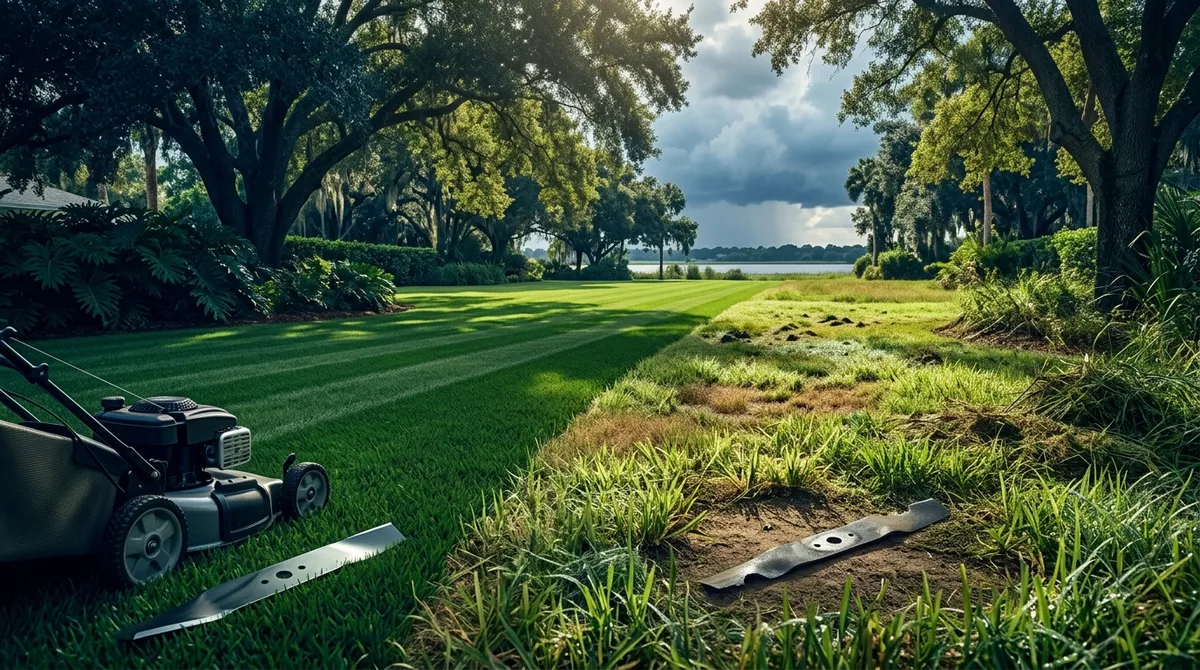
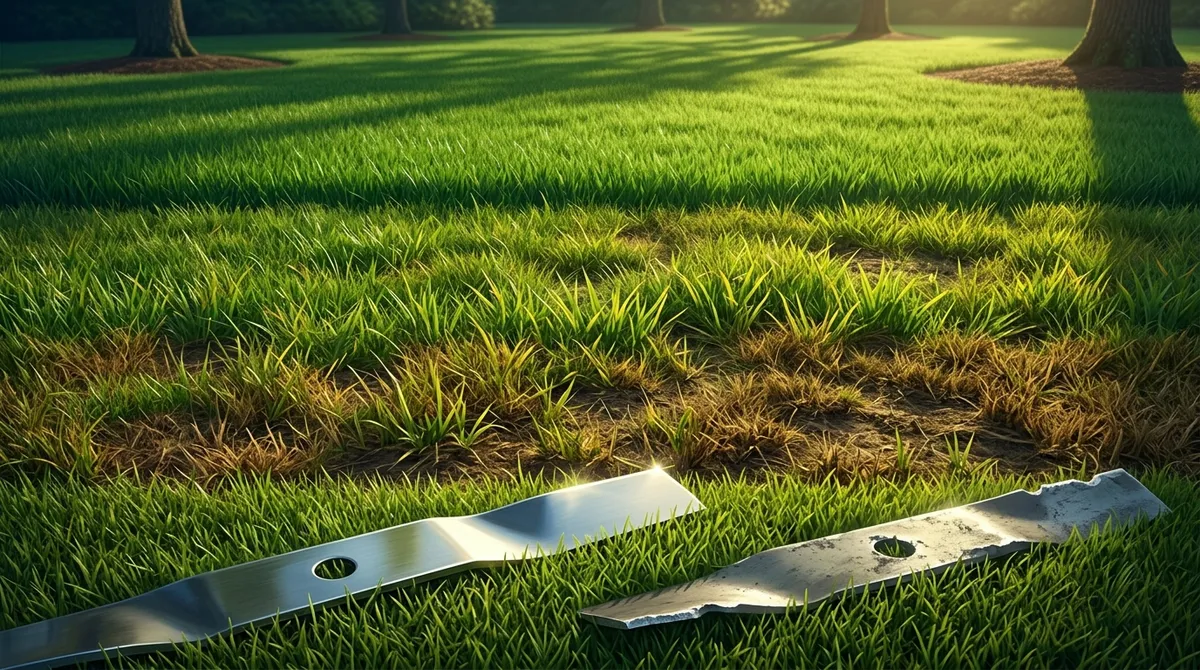
Not if it’s done correctly. The key factors are mowing height and blade sharpness. A dull lawn mower blade tears the grass rather than cutting it cleanly, which leads to browning tips and disease risk. Always mow with a sharp blade, regardless of how often you cut.
Also, never cut your grass shorter than its recommended height just because you’re mowing more often. Stick to the right height for your specific grass type. Scalping your lawn — even once — can cause lasting damage that takes weeks to recover from. Check out our guide on what happens if you mow your lawn too short in Florida to understand the real risks.
3 Tips for Safe Twice-a-Week Mowing
- Keep blades sharp — Sharpen your mower blades regularly, especially during heavy mowing seasons.
- Stick to the 1/3 rule — Only remove one-third of the grass blade per session to avoid stressing your lawn.
- Alternate your mowing pattern — Change the direction you mow each time to prevent soil compaction and encourage upright growth.
Should You Hire a Pro or Do It Yourself?
This is a great question, and the honest answer depends on your situation. If you’re a busy homeowner in Bloomingdale, mowing twice a week can quickly eat into your weekends. A professional lawn care team can handle the scheduling and execution for you — consistently and efficiently.
For elderly homeowners or those dealing with physical limitations, hiring a pro is often the best option. You get a healthy lawn without the physical strain. And if you’re a new homeowner still figuring out your grass type and the right mowing schedule, professional guidance can save you from costly mistakes. Check out our post on DIY lawn mowing vs. hiring a pro to weigh your options.
At All Trusted Lawn Care, we understand that every yard in Bloomingdale is different. Our team adjusts mowing frequency based on real growth conditions, not a rigid schedule. We serve Bloomingdale, Valrico, East Brandon, Fishhawk, Boyette, and Riverview — and we’re proud to be the trusted name for lawn maintenance in these communities.
What Does Professional Lawn Maintenance Actually Include?
When you hire a professional service, you’re getting more than just someone to push a mower. A solid lawn maintenance plan typically covers:
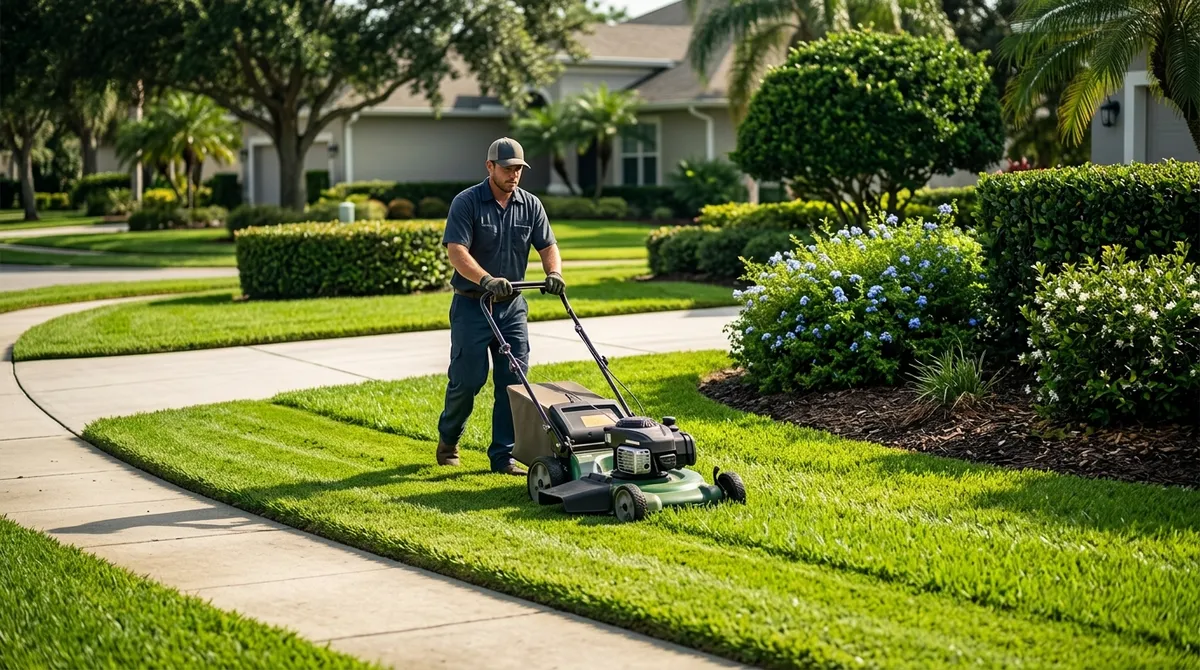
- Mowing at the correct height for your grass type
- Edging along sidewalks, driveways, and garden beds
- Trimming around obstacles like trees and fences
- Blowing clippings off hard surfaces
- Monitoring the lawn for visible issues like bare spots or uneven growth
If you’re not sure what to expect, our article on what is included in regular lawn maintenance service breaks it all down clearly.
How Mowing Frequency Affects Your Lawn’s Health
Mowing is not just about appearances. It directly affects your lawn’s overall health. Here’s how getting the frequency right pays off:
- Promotes thicker growth — Regular mowing encourages grass to spread laterally, creating a denser, fuller lawn.
- Reduces weeds — Mowing before weeds go to seed helps keep unwanted plants from taking over.
- Improves curb appeal — A well-maintained lawn is one of the first things people notice about your home or business.
For more detail on the connection between mowing habits and grass health, visit our article on how to use frequent mowing to get thicker, fuller grass. You can also follow us on Facebook for seasonal lawn care tips from our team.
Signs Your Mowing Schedule Needs Adjusting
Not sure if your current mowing routine is working? Here are a few telltale signs it’s time to make a change:
- Grass looks shaggy just 3–4 days after mowing — you may need to mow twice a week
- Grass looks the same after mowing as it did before — you may be mowing too often
- Clumps of clippings are left behind — you may be removing too much at once
- The lawn looks uneven or scalped in spots — height settings need adjusting
- Yellow or pale grass after cutting — could be stress from too-short cuts
If you’re seeing any of these signs, it’s a good idea to reassess your approach. Our guide on lawn mowing mistakes that damage your grass can help you identify where things might be going wrong. You can also read what our All Trusted Lawn Care customers say on Google to see how a consistent professional approach makes a real difference for Bloomingdale homeowners.
Final Thoughts: Is Mowing Twice a Week Too Much?
The truth is, mowing twice a week is not too much if your grass genuinely needs it. In Bloomingdale’s warm, wet growing season, some lawns absolutely benefit from more frequent cutting. But it’s not a one-size-fits-all answer. Listen to your grass, follow the 1/3 rule, and adjust your schedule as the seasons change.
If you’d rather let the experts handle it, All Trusted Lawn Care is here to help. We tailor every mowing plan to the specific needs of your yard — no guesswork, no damage, just a consistently beautiful lawn. For more helpful tips, explore our lawn care tips or check out our full list of professional lawn services.
Ready to take the stress out of lawn care? Reach out to our team today for a free estimate, or give us a call at 813-833-1882 — we’d love to help your Bloomingdale lawn look its absolute best.
FAQs
Q: Is mowing twice a week too much for St. Augustine grass in Florida?
A: Not during the summer growing season! St. Augustine grass can grow very quickly in Florida’s heat and humidity, so twice-a-week mowing may actually be the right call from late spring through early fall. Just make sure you’re sticking to the 1/3 rule and not cutting too short.
Q: Can mowing too often damage my lawn?
A: It can if you’re cutting the grass when it doesn’t need it or trimming it too short each time. The key is to only mow when your grass has grown enough to justify it. If you’re following the 1/3 rule and keeping the blade sharp, frequent mowing is generally safe and even beneficial.
Q: How do I know if my lawn needs to be mowed twice a week?
A: A good rule of thumb is to check if your grass has grown by about one-third since your last cut. If it’s getting tall again just 3 to 4 days after mowing, your lawn is telling you it’s ready for another pass. This is most common during Florida’s warm, rainy summer months.
Q: Does mowing frequency affect grass thickness?
A: Absolutely — and in a good way! Mowing regularly encourages grass to grow outward rather than just upward, which creates a thicker, fuller lawn over time. Consistent mowing at the right height is one of the easiest ways to improve the overall appearance and density of your yard.
Q: Should I hire a lawn care service to manage my mowing schedule?
A: If you’re finding it hard to keep up with mowing — especially during fast-growing seasons — hiring a professional is a fantastic idea. A good lawn care team will monitor your grass growth and adjust the mowing schedule as needed, so you never have to worry about cutting too often or letting it get overgrown.